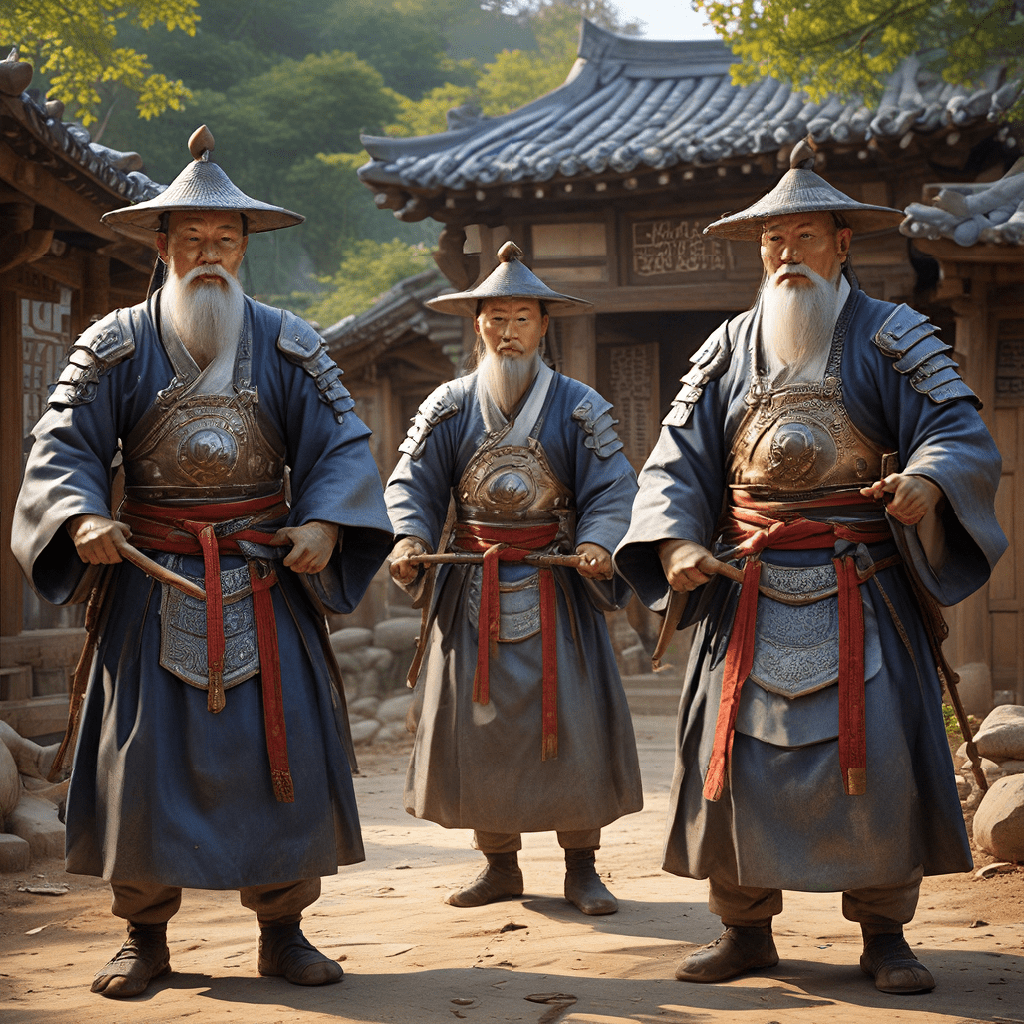
The Jangseung: Guardians of the Korean Village
Standing tall at the entrance of Korean villages, the Jangseung is a unique and fascinating symbol of Korean culture. These wooden totem poles, often painted in vibrant colors and adorned with intricate carvings, are much more than just decorative elements. They are believed to be powerful guardians, protecting the village and its inhabitants from evil spirits and misfortune.
For centuries, the Jangseung has been an integral part of Korean folklore and traditions. They are a testament to the rich history and cultural heritage of Korea, showcasing the country's unique artistic expressions and deep-rooted beliefs.
Mythological Origins: The Jangseung’s Role in Korean Folklore
The origins of the Jangseung are shrouded in myth and legend, deeply intertwined with Korean folklore. It’s believed that the Jangseung evolved from ancient shamanistic practices, where nature spirits were worshipped and appeased. Early Korean society viewed the world as a complex web of spirits and supernatural forces, with the Jangseung representing a bridge between the human and spirit realms.
One popular myth tells the story of a brave warrior named Jangseung who sacrificed himself to protect his village from a ferocious tiger. In honor of his bravery, villagers erected a wooden pole in his memory, which eventually became known as the Jangseung. This story highlights the Jangseung's role as a protector, a guardian spirit embodying the strength and sacrifice made for the community's well-being.
Symbolic Representations: Understanding the Jangseung’s Iconography
The iconography of the Jangseung is rich with symbolism, each detail carrying meaning and significance. The most common depiction is a human figure with a large, exaggerated head, often wearing a crown or hat. Sometimes, the Jangseung is depicted holding a sword or a staff, symbolizing strength and authority.
The head of the Jangseung, often shaped like a stylized sun or moon, represents the heavens and the divine power protecting the village. The large size of the head emphasizes the Jangseung's ability to ward off evil spirits and misfortune. The colors used in painting the Jangseung also hold symbolic meaning. Red, associated with fire and strength, is used to repel evil, while blue, symbolizing the sky and peace, represents serenity and protection.
Guardians of the Village: The Protective Power of the Jangseung
The Jangseung’s primary purpose is to protect the village from harm. It is believed that the Jangseung acts as a barrier, deflecting evil spirits and misfortune away from the community. Villagers often place offerings of food or incense at the base of the Jangseung, seeking its favor and protection.
The Jangseung's presence brings a sense of security and well-being to the villagers. It is a constant reminder of the protective forces watching over them, offering comfort and encouragement in times of need.
The Importance of Location: Placing the Jangseung in the Village
The placement of the Jangseung is crucial, reflecting its role as a guardian. Traditionally, Jangseungs are placed at the entrance of a village, facing the main road. This strategic location allows the Jangseung to watch over the village, keeping a watchful eye on any potential threats.
The Jangseung is often erected on a raised platform or base, further emphasizing its importance and symbolic power. The location of the Jangseung varies depending on the village's layout and local customs, but its placement always reflects the importance of protecting the village from harm.

The Jangseung’s Influence on Local Communities: Social and Cultural Impact
The Jangseung goes beyond simply being a guardian; it plays a vital role in shaping the social and cultural life of Korean villages. It serves as a focal point for community gatherings, celebrations, and rituals.
During festivals, villagers gather around the Jangseung to perform traditional dances and songs, seeking blessings and good fortune. The Jangseung acts as a symbol of unity, reminding villagers of their shared history, beliefs, and aspirations.
The Jangseung also has a significant impact on the everyday lives of villagers. It serves as a reminder of the importance of community and shared responsibility. It embodies the values of courage, strength, and sacrifice—values that are deeply ingrained in Korean culture.
The Jangseung’s Evolution: Changing Forms and Meanings Over Time
The Jangseung, like many aspects of cultural traditions, has evolved over time. While the basic form and purpose have remained consistent, its specific design and symbolism have adapted to reflect changing societal values and beliefs.
In the past, Jangseungs were often carved from a single piece of wood, representing the simplicity and unity of the community. As time progressed, Jangseungs became more elaborate, incorporating intricate carvings, colorful paint, and even details representing specific local legends or events. This evolution reflects the increasing complexity of Korean society and the growing influence of artistic expression.
Theories on the Origins: Exploring the Jangseung’s Roots
Scholars have proposed various theories about the origins of the Jangseung, with each theory shedding light on a particular aspect of its cultural significance.
One theory suggests that the Jangseung evolved from ancient shamanistic practices, where people worshipped nature spirits and sought their protection. The Jangseung's large head, often stylized as the sun or moon, is seen as a representation of these celestial bodies, signifying the power of the natural world.
Another theory connects the Jangseung to the tradition of "seowang," a type of ancient Korean totem pole. These poles were often erected to mark boundaries, honor ancestors, or protect against evil spirits. The Jangseung's role as a guardian and its placement at the village entrance may be linked to this ancient tradition.
The Jangseung as a Symbol of Korean Identity: Cultural Significance and National Pride
The Jangseung, with its rich history and strong symbolism, has become a powerful representation of Korean identity. It symbolizes the strong community spirit, the resilience of the Korean people, and their deep connection to their cultural heritage.
The Jangseung's presence in villages across Korea serves as a constant reminder of the country's unique traditions and values. It represents the enduring nature of Korean culture, its ability to adapt and evolve while staying true to its core beliefs. The Jangseung, therefore, evokes a sense of national pride and a deep connection to the Korean heritage.
The Jangseung Today: Continuing Traditions and Modern Interpretations
The Jangseung continues to hold a special place in Korean culture today. While traditional Jangseungs are still found in villages across the country, they have also inspired modern reinterpretations.
Artists, designers, and architects have incorporated the Jangseung's form and symbolism into their work, creating contemporary sculptures, paintings, and even architectural designs. This modern interpretation of the Jangseung demonstrates its enduring relevance and its ability to resonate with contemporary audiences.
The Jangseung's presence in modern society, in both traditional and contemporary forms, serves as a testament to its enduring cultural significance and its ability to evolve alongside the changing times.
Frequently Asked Questions
What is the Jangseung?
The Jangseung is a traditional Korean wooden totem pole, often carved and painted, found at the entrance of villages. It is believed to guard the village from evil spirits and misfortune.
What is the Jangseung's purpose?
The Jangseung's primary purpose is to protect the village and its inhabitants from harm. It is believed to act as a barrier, deflecting evil spirits and misfortune away from the community.
Where is the Jangseung placed in a village?
The Jangseung is typically placed at the entrance of the village, facing the main road. This strategic location allows the Jangseung to watch over the village, keeping a watchful eye on any potential threats.
What does the Jangseung symbolize?
The Jangseung represents the power of the community, strength, protection, and the connection between the human and spirit worlds. It is also a symbol of Korean identity and cultural heritage.
How has the Jangseung evolved over time?
The Jangseung's design and symbolism have evolved over time, reflecting changes in societal values and artistic expression. While the basic form and purpose have remained consistent, it has become more elaborate, incorporating intricate carvings, colorful paint, and even details representing specific local legends.