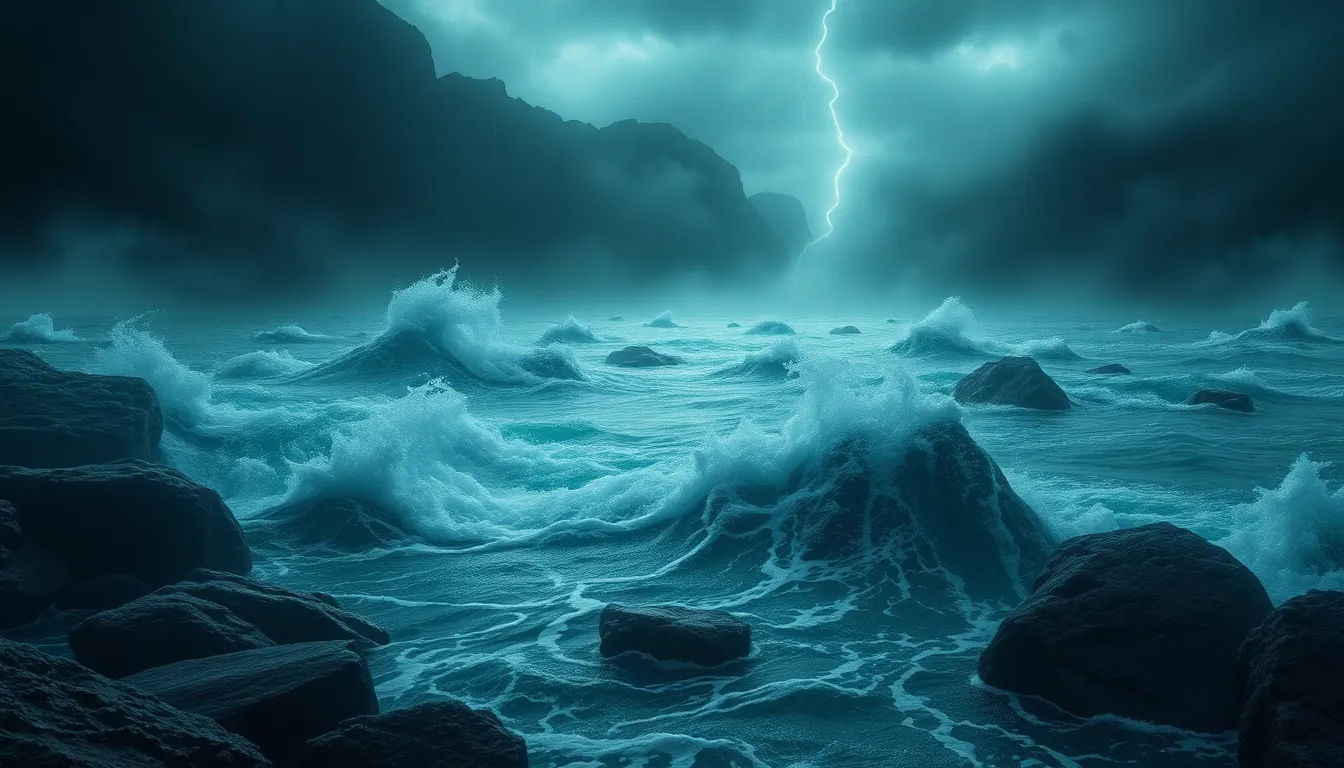
The Forgotten River: Myths of the Lost Atlantis
I. Introduction
Atlantis, the mythical island first introduced by the ancient Greek philosopher Plato, has captivated the imaginations of countless generations. Described as a powerful and advanced civilization that ultimately fell into ruin, Atlantis has become a symbol of human ambition, tragedy, and the quest for understanding our past. The concept of a “forgotten river” emerges as a significant element in the narratives surrounding Atlantis, embodying themes of life, death, and the flow of time.
This article aims to explore the myths and theories surrounding Atlantis and its elusive river, delving into the historical context, cultural impact, and modern interpretations of this enduring legend.
II. Historical Context of Atlantis
Plato’s accounts of Atlantis are primarily found in two dialogues: Timaeus and Critias. In these works, he describes Atlantis as a powerful civilization that existed around 9,000 years before his time, located beyond the “Pillars of Hercules” (modern-day Strait of Gibraltar). Plato presents Atlantis as a utopian society with advanced technology and immense wealth, which ultimately fell into decadence and was punished by the gods through its cataclysmic sinking into the ocean.
Plato’s geographical descriptions of Atlantis have led to numerous theories about its possible location, including the Mediterranean, the Caribbean, and even Antarctica. The philosopher’s depiction serves not only as a cautionary tale about hubris but also as a reflection on the ideal state of civilization.
III. The Myth of the Forgotten River
In mythology, rivers often symbolize life’s journey, purification, and the boundary between the material world and the spiritual realm. In the context of Atlantis, the river plays a crucial role in shaping the civilization’s identity and prosperity. Plato mentions a great river that flowed through Atlantis, which was said to be abundant and vital for the island’s fertility.
Comparatively, other mythological rivers serve similar symbolic purposes. For instance:
- The Styx, which forms the boundary between Earth and the Underworld.
- The Lethe, associated with forgetfulness and oblivion in the afterlife.
These rivers, like the forgotten river of Atlantis, underscore the duality of existence—life and death, knowledge and ignorance.
IV. Theories and Speculations on the Location of Atlantis
Various theories have emerged regarding the possible location of Atlantis, each offering intriguing insights and speculations. Some of the most popular theories include:
- Santorini: The volcanic island in the Aegean Sea, which experienced a catastrophic eruption around 1600 BCE, leading some researchers to believe it may have inspired the Atlantis legend.
- Antarctica: Some researchers propose that Atlantis may have been located in a now-submerged region of Antarctica, suggesting that climate change and tectonic shifts could have hidden its remains.
- The Azores Islands: Another theory posits that these islands could be the remnants of Atlantis, as they are located in the middle of the Atlantic Ocean.
In many of these theories, river systems play a significant role in establishing the viability of these locations. Archaeological findings, such as ancient canal systems and sedimentary structures, have led to discussions about the existence of advanced civilizations with intricate water management systems.
V. The Cultural Impact of the Atlantis Myth
The myth of Atlantis has left an indelible mark on literature and art throughout the centuries. From the works of Renaissance painters to contemporary novels and films, the allure of Atlantis continues to inspire creativity:
- Literature: Authors like Jules Verne and H.P. Lovecraft have incorporated elements of Atlantis into their narratives, exploring themes of lost civilizations and the unknown.
- Art: Artists have depicted Atlantis in various forms, often portraying it as a utopian society characterized by grand architecture and natural beauty.
- Modern Media: Films such as Disney’s Atlantis: The Lost Empire and numerous video games have brought new life to the legend, making it accessible to younger audiences.
The river motif within these cultural representations often reflects deeper themes of connection, loss, and the passage of time, serving as a metaphor for human experience.
VI. The Forgotten River in Folklore and Legends
Beyond Atlantis, various civilizations have their own legends of lost rivers, often embodying similar themes of loss and the search for meaning. For instance:
- The River Acheron: In Greek mythology, this river is associated with the underworld, serving as a boundary between the living and the dead.
- The Great Flood narratives: Many cultures have stories of great floods that submerged entire civilizations, often linked to the loss of sacred rivers.
These myths share commonalities with the Atlantis narrative, highlighting humanity’s enduring fascination with lost places and the rivers that once nourished them. The psychological and symbolic importance of these narratives often reflects our fears and hopes regarding the impermanence of life.
VII. Scientific Perspectives on Atlantis and Its River
Scientific inquiry into Atlantis has led to various geological studies aimed at uncovering evidence of ancient civilizations and their waterways. Researchers have explored the possibility of submerged landmasses and the impact of climate change on coastal settlements. Some key points include:
- Geological Studies: Satellite imagery and sonar mapping have revealed underwater structures that some speculate could be remnants of lost civilizations.
- Climate Change: The role of natural disasters, such as earthquakes and tsunamis, may have contributed to the disappearance of advanced societies, including Atlantis.
These investigations bridge the gap between myth and reality, suggesting that the stories of lost civilizations may have roots in actual historical events.
VIII. The Forgotten River in Modern Culture
The myth of Atlantis continues to influence contemporary media, reflecting current societal themes and concerns. In modern storytelling, the river often serves as a metaphor for:
- Environmental Concerns: The degradation of natural water systems and the impact of pollution are reflected in narratives that echo the fate of Atlantis.
- Personal Journeys: The river as a symbol of life’s journey, representing growth, change, and the passage into the unknown.
These interpretations allow for a rich exploration of the Atlantis myth, resonating with audiences and encouraging reflection on our relationship with nature and each other.
IX. Conclusion
In summary, the myths surrounding Atlantis and its forgotten river weave a complex tapestry of historical, cultural, and psychological themes. From Plato’s philosophical musings to modern interpretations in art and media, the story of Atlantis continues to spark curiosity and debate.
The enduring fascination with this lost civilization and its river speaks to a deeper human desire to explore the boundaries of knowledge and existence. As we continue to delve into these myths, we uncover not only our past but also insights into our present and future.
X. References and Further Reading
For those interested in exploring the myths of Atlantis and its forgotten river further, the following resources are recommended:
- Books: “Atlantis: The Antediluvian World” by Ignatius Donnelly, “The Atlantis Blueprint” by Graham Hancock.
- Articles: Academic journals exploring archaeological findings related to ancient civilizations.
- Documentaries: “Ancient Aliens” episodes that discuss Atlantis and related myths.