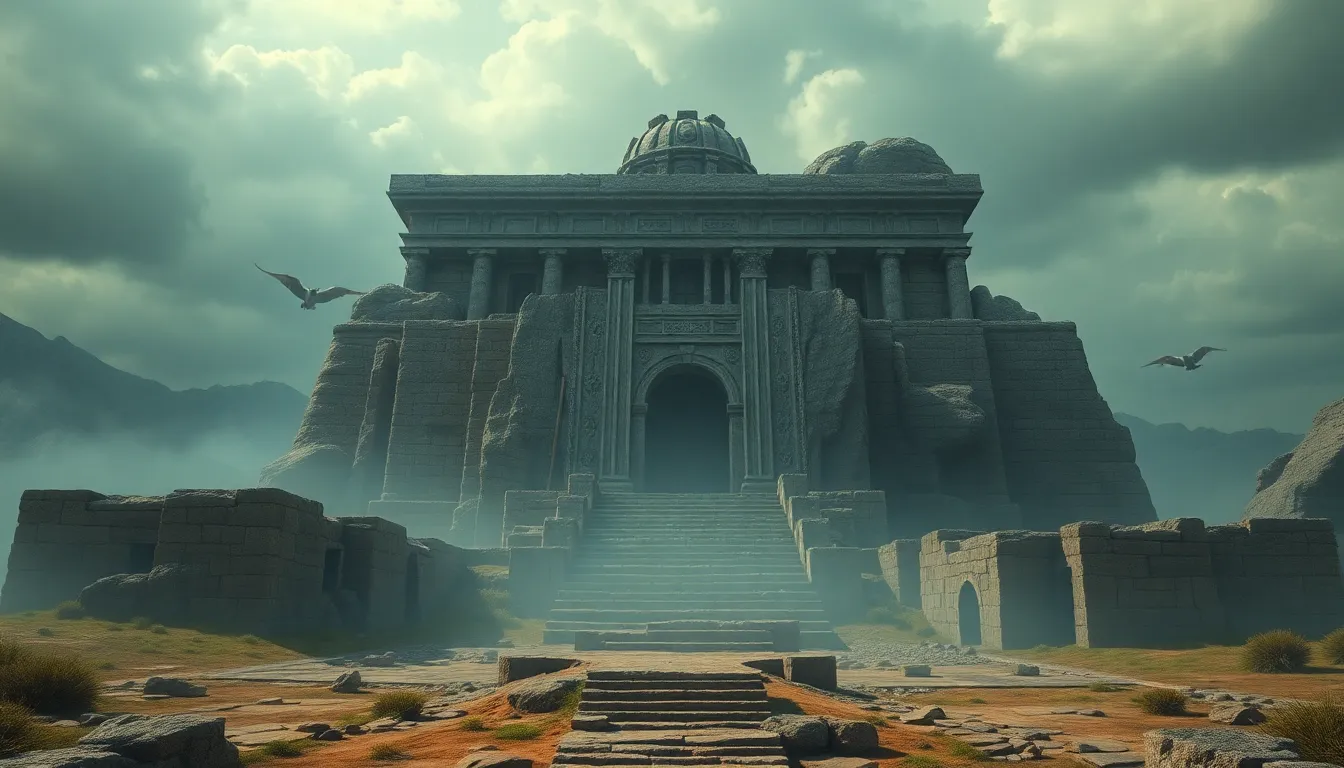
The Kingdom of the Lost Civilizations: Myths That Shaped History
I. Introduction
The concept of lost civilizations captivates the imagination, invoking a sense of mystery and adventure. A lost civilization is typically defined as a society that has vanished from the historical record, leaving behind only fragments of its existence. These civilizations often become shrouded in myths that reflect the cultural values and fears of the societies that remember them. This article will explore specific lost civilizations, their myths, and the ways in which these narratives continue to influence our understanding of history.
II. The Concept of Lost Civilizations
The historical context of lost civilizations spans various cultures and epochs. While definitions may vary, the term generally refers to advanced societies that have disappeared, often under mysterious circumstances. Famous examples include:
- Atlantis: A legendary island mentioned by Plato.
- Mu: A theorized continent believed to be the cradle of humanity.
- Lemuria: A proposed land bridge that once connected continents.
The intersection of archaeology and mythology plays a crucial role in the exploration of these lost civilizations, as researchers seek to differentiate between historical fact and mythological embellishment.
III. Atlantis: The Lost City of the Sea
The myth of Atlantis originates from the works of Plato, who described it as a powerful and advanced civilization that ultimately succumbed to its hubris and was submerged beneath the ocean. Various theories regarding Atlantis’s location have emerged over the centuries, ranging from the Mediterranean to Antarctica.
The impact of the Atlantis myth on modern culture is profound, influencing literature, film, and even philosophical discussions about civilization and morality. Archaeological searches for Atlantis have provided insights into ancient cultures, although no definitive proof has been found, leading to ongoing debates among historians and archaeologists.
IV. Mu: The Motherland of Humanity
The concept of Mu as a lost continent was popularized by James Churchward in the early 20th century. Churchward claimed that Mu was the original home of humanity, from which all cultures descended after its cataclysmic destruction. His writings, although lacking scientific validity, sparked interest in the idea of lost civilizations and their significance.
Culturally, the myth of Mu has influenced modern spiritual movements, with some groups viewing it as a source of mystical knowledge and wisdom. The idea of a lost motherland resonates with many, representing a longing for a simpler, more connected existence.
V. Lemuria: The Mystery of the Indian Ocean
Lemuria originated as a scientific hypothesis in the 19th century, proposed to explain the distribution of certain species and languages across the Indian Ocean. However, the concept quickly became entwined with pseudoscientific and racial theories, particularly during the colonial era.
Colonialism significantly impacted the myths surrounding Lemuria, as it was often used to justify racial hierarchies and colonial domination. In modern interpretations, Lemuria continues to be associated with spiritual and mystical beliefs, highlighting its relevance in contemporary discussions about race and identity.
VI. The Myth of the Amazons: Warrior Women of Antiquity
The Amazons are depicted in ancient texts as fierce female warriors, often at odds with male-dominated societies. Historical accounts vary, with some suggesting that they were based on real tribes of warrior women, while others depict them as purely mythical figures.
The influence of the Amazon myth on gender roles is significant, challenging traditional notions of femininity and masculinity throughout history. Archaeological discoveries, such as burial sites of female warriors, have provided evidence that supports the existence of women in combat roles, blurring the lines between myth and reality.
VII. The Incan Legend of El Dorado
The legend of El Dorado originated from tales of a city of gold, attracting explorers and fortune-seekers to South America. Initially, El Dorado referred to a king who covered himself in gold dust, but over time, it evolved into a myth about a city filled with unimaginable riches.
The quest for El Dorado had profound consequences for indigenous civilizations, leading to exploitation and violence. In contemporary culture, the myth persists, symbolizing the allure of wealth and the consequences of greed.
VIII. The Role of Myths in Shaping Historical Narratives
Myths play an essential role in shaping cultural narratives, reflecting societal values and fears. They often serve as cautionary tales, warning against hubris, greed, and the consequences of human actions. Throughout history, political leaders have used myths as propaganda tools to justify actions or unify people under a common identity.
Moreover, myths can provide insights into human nature and civilization. They highlight universal themes such as love, loss, and the quest for meaning, helping us understand our place in the world.
IX. Modern-Day Fascinations with Lost Civilizations
In recent years, there has been a resurgence of interest in lost civilizations, fueled by popular media, documentaries, and books. This fascination often blurs the line between historical fact and fiction, as sensationalized portrayals capture the public’s imagination.
Technology has significantly impacted the search for historical truths, with advancements in archaeology, satellite imagery, and genetic testing providing new insights into ancient civilizations. However, conspiracy theories also thrive in this environment, complicating our understanding of history and leading to the questioning of established narratives.
X. Conclusion
The significance of lost civilizations and their myths cannot be overstated. These stories continue to resonate in contemporary society, reflecting our collective longings and fears. As we explore the remnants of these ancient cultures, we uncover not only their histories but also insights into our own humanity. The allure of lost civilizations reminds us of the complexity of history and the enduring power of myth.