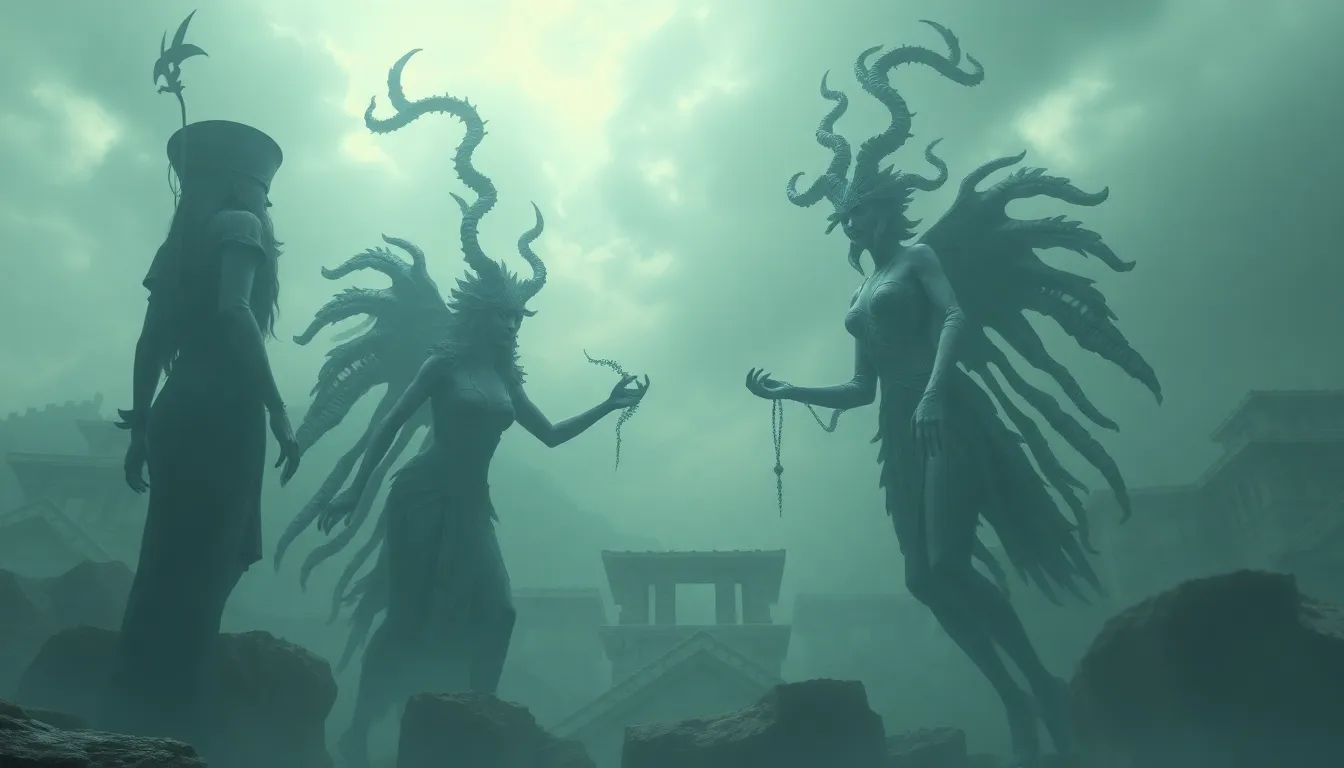
The Mythical Kingdom of the Gorgons: Legends of Fearsome Females
I. Introduction to the Gorgons
The Gorgons are one of the most captivating figures in ancient mythology, often depicted as fearsome females with the power to petrify anyone who meets their gaze. The term “Gorgon” comes from the Greek word “gorgo,” which means “terrible.” They are primarily known as three sisters: Medusa, Stheno, and Euryale.
In ancient cultures, the Gorgons represented the duality of beauty and terror. They were not merely monsters; they embodied the fears and complexities surrounding femininity. This article aims to explore the legends of the Gorgons, their historical significance, and their lasting impact on culture and society.
II. Historical Context of Gorgons in Ancient Greece
In Greek mythology, Gorgons played a significant role as both protectors and threats. They were often portrayed as guardians of sacred spaces, and their monstrous appearances served to ward off intruders. Unlike other mythical beings, such as nymphs or muses, Gorgons were primarily viewed through the lens of fear and monstrosity.
When comparing Gorgons to other mythical creatures, it is clear that they occupy a unique niche. While many mythical beings symbolize beauty and grace, Gorgons challenge these notions by embodying strength through fear. Their existence raises questions about how society views female power and monstrosity.
III. The Gorgon Sisters: Medusa, Stheno, and Euryale
A. Detailed profiles of each sister
1. Medusa: The most famous Gorgon and her tragic backstory
Medusa is undoubtedly the most recognized of the Gorgon sisters. Unlike her immortal siblings, she was once a beautiful maiden, cursed by Athena for her transgressions. This curse transformed her luscious hair into snakes and granted her the terrifying ability to turn men to stone.
2. Stheno: The fierce warrior and protector
Stheno, the eldest sister, is known for her strength and ferocity. Unlike Medusa, Stheno is immortal and possesses incredible power. She often symbolizes the protective aspects of femininity, acting as a guardian against threats.
3. Euryale: The immortal sister and her role in mythology
Euryale, the third sister, is also immortal and represents the embodiment of horror. She is known for her lamentations and as a source of terror for her enemies. Together, the sisters illustrate a complex dynamic of fear, protection, and the duality of womanhood.
B. Dynamics between the sisters and their symbolization of strength and fear
The dynamics between Medusa, Stheno, and Euryale reflect a spectrum of feminine power. While Medusa’s story is often seen as tragic, it also speaks to resilience. Stheno and Euryale, through their fierce characteristics, challenge traditional notions of femininity and establish new narratives around female strength.
IV. The Gorgon’s Physical Attributes and Symbolism
A. Description of their monstrous features: hair of snakes, petrifying gaze
The Gorgons are typically depicted with grotesque features: their hair is made of writhing snakes, and their eyes possess a petrifying gaze that can turn anyone into stone. This horrific appearance serves as a powerful metaphor for the fear of female power and sexuality.
B. Symbolism of beauty and horror intertwined
The Gorgons embody the paradox of beauty and horror. Medusa’s initial beauty, followed by her monstrous transformation, reflects societal fears surrounding female empowerment and sexuality. This duality makes the Gorgons compelling symbols of the complexities of womanhood.
C. Interpretation of Gorgon imagery in art and literature
Throughout history, Gorgon imagery has appeared in various forms of art and literature, representing both fear and fascination. From ancient Greek pottery to Renaissance paintings, the Gorgons’ representation has evolved while maintaining their symbolic significance as embodiments of power and monstrosity.
V. The Gorgons in Literature and Art Throughout the Ages
A. Ancient texts: Hesiod and Ovid’s portrayal of Gorgons
In ancient texts, Hesiod and Ovid provide foundational narratives about the Gorgons. Hesiod describes their origins, while Ovid delves into Medusa’s tragic story, highlighting themes of transformation and punishment.
B. Renaissance interpretations and their influence on modern art
During the Renaissance, the Gorgons were reinterpreted, often as symbols of female rage and power. Artists like Caravaggio and Rubens presented them in ways that emphasized both their beauty and terror, influencing modern artistic representations.
C. Gorgons in contemporary literature and media
In contemporary literature and media, the Gorgons continue to capture the imagination. They are often portrayed as complex characters, challenging the traditional narratives of victimhood and monstrosity. Modern retellings explore their stories from feminist perspectives, emphasizing empowerment.
VI. The Gorgons as Feminist Icons
A. Exploration of the Gorgons as symbols of female power and rebellion
The Gorgons serve as feminist icons, representing resistance against patriarchal norms. Their monstrous forms challenge the idea that women must conform to traditional standards of beauty and behavior.
B. The narrative of victimhood vs. empowerment in Gorgon myths
While Medusa’s story is often framed as one of victimhood, it also speaks to empowerment. Her transformation into a monster can be seen as a reclamation of power, challenging the narratives imposed upon her by male gods and society.
C. Modern feminist reinterpretations of Gorgon legends
Today, feminist reinterpretations of Gorgon legends explore themes of rage, empowerment, and identity. These narratives emphasize the strength found in embracing one’s monstrous aspects, challenging societal norms surrounding femininity.
VII. The Gorgons in Popular Culture
A. Representation in films, video games, and television
Gorgons have been featured in numerous films, video games, and television series, often serving as formidable adversaries or complex protagonists. Their representation continues to evolve, reflecting contemporary views on femininity and power.
B. The Gorgon archetype in modern storytelling
The Gorgon archetype has become a symbol of female rage and strength in modern storytelling. Characters inspired by the Gorgons often navigate themes of empowerment, vengeance, and the reclaiming of identity.
C. Case studies: Notable portrayals of Gorgons in pop culture
- Clash of the Titans: Medusa serves as a central figure, showcasing both her horror and tragic backstory.
- Percy Jackson and the Olympians: Medusa is portrayed as both villainous and sympathetic, reflecting modern interpretations.
- Wonder Woman: The character of Medusa is revisited, emphasizing her strength and complexity.
VIII. The Gorgon Mythology’s Impact on Modern Society
A. The legacy of Gorgon myths in psychological and cultural studies
The legacy of Gorgon myths has influenced psychological and cultural studies, particularly in discussions surrounding female rage and empowerment. The Gorgons serve as metaphors for the complexities of women’s experiences in a patriarchal society.
B. Gorgons as metaphors in discussions of female rage and power
In contemporary discourse, Gorgons symbolize the expression of female rage and the reclamation of power. They challenge societal expectations and encourage women to embrace their strength and individuality.
C. The relevance of Gorgon stories in contemporary feminist discourse
The stories of the Gorgons remain relevant in contemporary feminist discourse, serving as cautionary tales and empowering narratives. They remind us of the power of female resilience and the importance of embracing the complexities of womanhood.