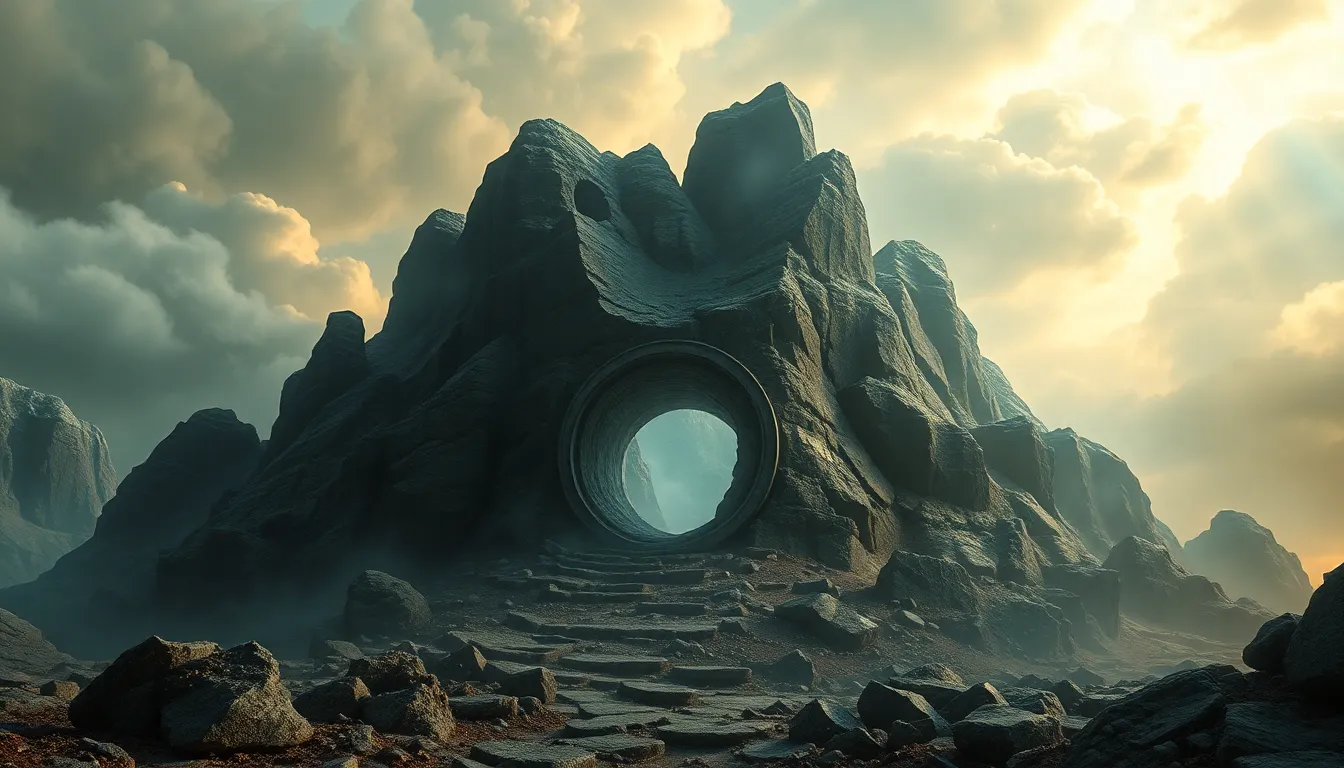
The Quest for the Hidden Realm: Myths of Parallel Worlds
I. Introduction to Parallel Worlds
Parallel worlds, often referred to as alternate or hidden realms, have captivated human imagination across various cultures and epochs. These worlds, existing alongside our own, offer a rich tapestry of mythological significance. They serve as a way to explore complex themes of existence, morality, and the human psyche. This article aims to delve deep into the myths surrounding parallel worlds, examining ancient beliefs, cultural interpretations, and modern representations, while also contemplating their relevance in contemporary society.
II. Historical Context of Parallel Worlds in Mythology
Throughout history, ancient civilizations have woven narratives that include the existence of multiple realms. These myths often reflect the values, fears, and hopes of the societies from which they originate.
A. Ancient civilizations and their beliefs in multiple realms
1. Mesopotamian myths
In Mesopotamian mythology, the concept of multiple realms is vividly illustrated through the stories of the afterlife. The ancient Sumerians believed in a netherworld called Kur, where souls would journey after death. This realm was often depicted as a dark and dreary place, contrasting sharply with the vibrant life on earth.
2. Egyptian cosmology
The Egyptians had a complex view of the afterlife, with the Duat, or underworld, representing a parallel realm where souls would face trials before entering the Fields of Aaru, a paradise. Their belief in the journey through hidden realms emphasizes the significance of morality and the afterlife.
B. The role of parallel worlds in religious narratives
Many religious narratives also incorporate the idea of parallel worlds. For instance, in Christianity, the concepts of Heaven and Hell serve as contrasting realms that reflect the moral choices made during one’s life. These narratives provide a framework for understanding human behavior and the consequences of one’s actions.
III. The Symbolism of Hidden Realms
Beyond their narrative significance, hidden realms symbolize deeper psychological concepts.
A. Psychological interpretations of parallel worlds
From a psychological perspective, parallel worlds can represent the different facets of the human mind. They can symbolize the struggle between conscious and unconscious thoughts, desires, and fears.
B. The hidden realm as a metaphor for the subconscious
The hidden realms often serve as metaphors for the subconscious, showcasing the parts of ourselves that remain unexplored or suppressed. This exploration can lead to greater self-awareness and personal growth.
IV. Notable Myths from Different Cultures
Various cultures have crafted their own unique myths concerning parallel worlds, each adding to the rich tapestry of human storytelling.
A. The Norse Yggdrasil and its nine realms
Norse mythology introduces Yggdrasil, the World Tree, which connects nine realms, including Asgard, Midgard, and Hel. Each realm represents different aspects of existence, from the divine to the dead, illustrating the interconnectedness of all life.
B. The Greek concept of the Underworld and Hades
The Greeks envisioned the Underworld as a parallel realm governed by Hades, where souls resided after death. This realm was divided into various sections, such as Elysium for the virtuous and Tartarus for the wicked, reflecting the moral structure of Greek society.
C. The Hindu idea of Lokas (worlds) and their significance
In Hindu cosmology, Lokas are realms that encompass various planes of existence, from the earthly realm to divine realms inhabited by gods. This multilayered perspective encourages a broader understanding of life and existence beyond human experience.
V. Modern Interpretations of Parallel Worlds
In contemporary society, the concept of parallel worlds has found new life in science fiction and fantasy.
A. Science fiction and fantasy representations
Modern literature and films often explore parallel worlds, presenting them as escape routes or as mirrors reflecting societal issues. Works like Philip K. Dick’s “The Man in the High Castle” and the “Harry Potter” series delve into the implications of alternate realities.
B. Influences of parallel world theories in contemporary literature and film
- Movies: Films like “Interstellar” and “Doctor Strange” depict complex theories of parallel universes.
- Books: Series like “His Dark Materials” explore the notion of multiple worlds and their interconnectedness.
- Video Games: Games such as “The Legend of Zelda” series feature parallel realms that players can navigate.
VI. Scientific Perspectives: Theories of Multiverses
The scientific community has also entertained the notion of parallel worlds, leading to the development of multiverse theories.
A. Overview of the multiverse theory in physics
In physics, the multiverse theory posits that there are multiple, perhaps infinite, universes that exist simultaneously. Each universe may have different physical laws and properties, challenging our understanding of reality.
B. Comparison of scientific and mythical interpretations of parallel worlds
While myths provide a narrative framework for understanding human experience, scientific interpretations offer a more empirical approach. Both perspectives, however, reflect humanity’s enduring quest to comprehend existence beyond our immediate reality.
VII. The Role of Folklore in Shaping Beliefs
Folklore plays a crucial role in preserving and transforming myths about hidden realms.
A. How folklore preserves and transforms myths of hidden realms
Folklore often adapts ancient myths, reflecting contemporary values and concerns. This process keeps the narratives alive, ensuring their relevance across generations.
B. Case studies of folklore from various cultures
- Japanese Folklore: Stories of Yōkai and spirit realms illustrate the cultural significance of hidden worlds.
- Native American Traditions: Many tribes tell tales of spirit worlds that interact with the physical realm.
VIII. The Impact of Technology on the Perception of Parallel Worlds
Advancements in technology have transformed how we perceive and interact with the concept of parallel worlds.
A. Virtual reality and its parallels with mythological realms
Virtual reality (VR) creates immersive experiences that mimic the idea of alternate realities, allowing users to explore digital realms that echo those found in mythology.
B. How technology influences our understanding of reality and myth
As technology evolves, it challenges our perceptions of reality, blurring the lines between the physical and the virtual. This shift prompts a re-examination of ancient myths in light of modern experiences.
IX. The Quest for the Hidden Realm in Popular Culture
Popular culture continues to explore the theme of parallel worlds, demonstrating its enduring appeal.
A. Analysis of books, movies, and video games that explore parallel worlds
Numerous works delve into the dynamics of parallel worlds:
- “The Chronicles of Narnia”: A classic series that invites readers into a magical realm.
- “Stranger Things”: A series that explores a hidden dimension known as the Upside Down.
- “The Dark Tower”: Stephen King’s epic saga intertwines multiple realities and worlds.
B. The cultural significance of these narratives in society
These narratives resonate with audiences, reflecting societal fears, desires, and the quest for understanding in an increasingly complex world.
X. Conclusion: The Enduring Allure of Hidden Realms
The fascination with parallel worlds and hidden realms is a testament to humanity’s deep-seated desire to explore the unknown. As we navigate the complexities of modern life, these myths continue to provide insight, inspiration, and a sense of wonder. The allure of hidden realms, whether in ancient myths or contemporary narratives, remains a powerful force in shaping our understanding of existence and the universe.