The Legend of the Skinwalker in Native American Mythology
I. Origins and Historical Context
The legend of the Skinwalker is deeply rooted in the rich oral traditions of Native American tribes, particularly those residing in the Southwestern United States, including the Navajo, Apache, and Ute peoples. Its origins can be traced back to ancient times, with various accounts passed down through generations. The Skinwalker is believed to be a powerful, shape-shifting creature possessing supernatural abilities and a malevolent nature.
II. Physical Manifestations and Abilities
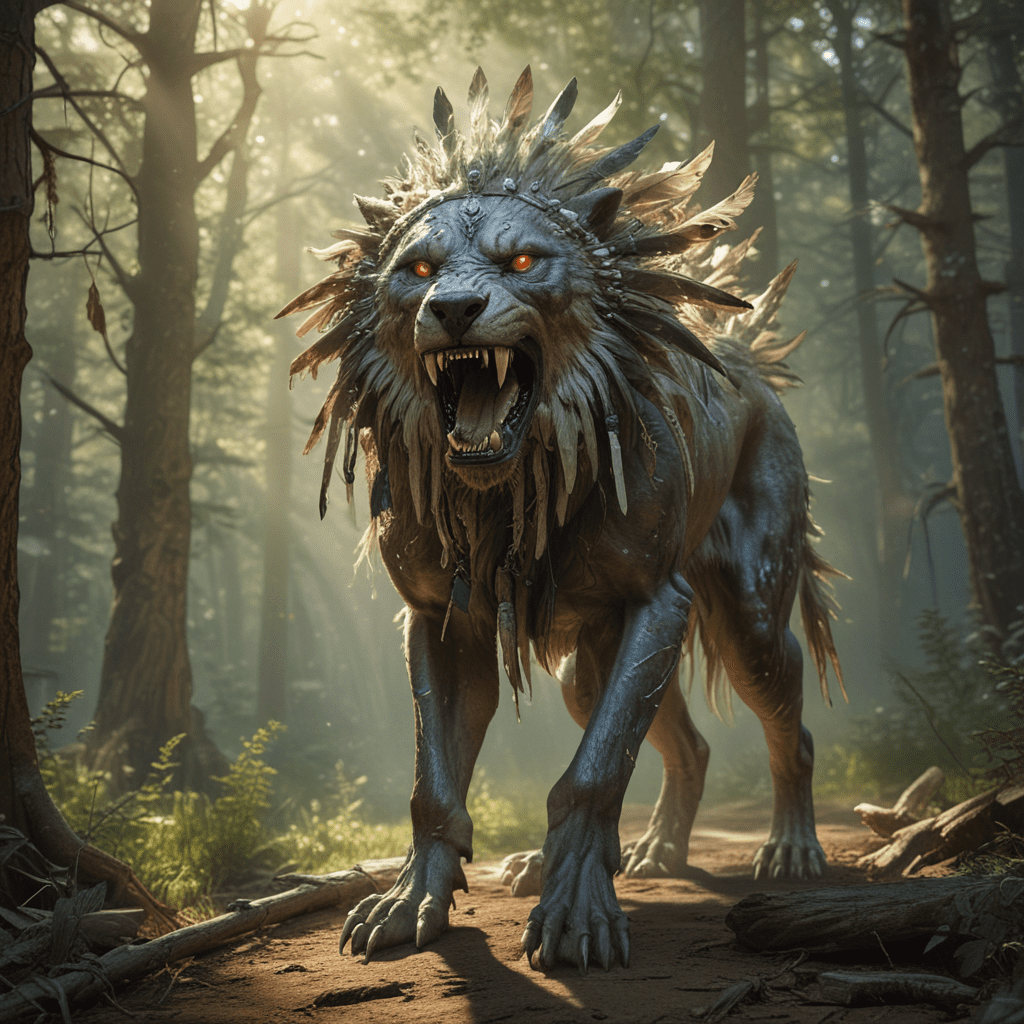
In Native American folklore, the Skinwalker is often described as assuming the form of an animal, commonly a coyote, wolf, bear, or owl. These transformations allow the Skinwalker to move undetected and hunt its prey. It is said to possess heightened senses, including exceptional night vision and the ability to locate its victims over long distances. The Skinwalker's physical strength and agility are also said to be extraordinary, enabling it to overpower even the strongest opponents.
III. Spiritual Beliefs and Malevolent Nature
The Skinwalker is ingrained within the spiritual beliefs of Native American cultures. It is associated with witchcraft and dark magic, with some tribes believing it to be the embodiment of an evil spirit or sorcerer. The Skinwalker is commonly depicted as a malicious creature that delights in terrorizing and harming humans. Its malevolent nature may stem from a desire for revenge, a thirst for power, or simply a primal instinct to survive and hunt.
IV. Transformations and Shape-Shifting
A defining characteristic of the Skinwalker is its ability to transform into various animal forms. This shape-shifting ability allows it to blend seamlessly into its surroundings, avoid detection, and approach its prey unnoticed. The Skinwalker's ability to change its physical appearance is a powerful tool that contributes to its reputation as a cunning and formidable predator.
V. Hunting and Preying on Humans
The Skinwalker is often portrayed as a hunter and a predator in Native American folklore. It is believed to stalk its human victims, using its animal disguises and supernatural abilities to gain an advantage. The Skinwalker is said to attack without mercy, killing its victims for sustenance or out of a desire for malicious harm. Its hunting instincts and predatory behavior make it a feared creature within Native American communities.
VI. Cultural Significance and Beliefs
The Skinwalker holds great cultural significance within Native American tribes. It represents a deep-rooted fear of malevolent spirits, witchcraft, and the unknown. The Skinwalker is often featured in cautionary tales, legends, and oral histories, serving as a warning against engaging in dark magic or straying from the path of righteousness.
VII. Modern Encounters and Reports
Despite the passage of time, belief in the Skinwalker persists in many Native American communities and beyond. There have been numerous reported encounters with the Skinwalker in modern times, both in the Southwestern United States and in other regions. These reports often describe strange animal sightings, unexplained noises, and feelings of being stalked or watched.
VIII. The Navajo Perspective and Skinwalker Witchcraft
The Navajo people have a particularly strong belief in the Skinwalker, referring to it as "yee naaldlooshii." In Navajo culture, the Skinwalker is associated with witchcraft and the practice of dark magic. It is believed that individuals may become Skinwalkers through the use of powerful rituals and incantations, gaining the ability to transform into animals and harm others.
IX. Symbolism and Interpretation
The Skinwalker can be interpreted as a symbol of fear, darkness, and the dangers of unchecked power. Its shape-shifting abilities represent the ability to deceive and manipulate, while its predatory nature symbolizes the potential for great harm. In some interpretations, the Skinwalker may also embody the concept of duality, as it exists both in the animal and human realms.
X. Relevance in Contemporary Society
The legend of the Skinwalker continues to resonate in contemporary society, finding expression in popular culture, literature, and film. Its enduring relevance speaks to the deep-seated human fascination with the supernatural and the unknown. The Skinwalker serves as a reminder of the power of fear, the importance of cultural beliefs, and the need for caution when dealing with the forces of darkness.
FAQ
What is a Skinwalker?
A Skinwalker is a shape-shifting, malevolent creature in Native American mythology, often associated with witchcraft and dark magic.
What are the origins of the Skinwalker legend?
The Skinwalker legend has deep roots in the oral traditions of Native American tribes, particularly those residing in the Southwestern United States.
How does a Skinwalker appear?
A Skinwalker assumes animal forms, commonly a coyote, wolf, bear, or owl, to move undetected and hunt its prey.
Why do Skinwalkers attack humans?
Skinwalkers are depicted as malicious creatures that delight in terrorizing and harming humans; their motives may range from revenge to a desire for power.
Are Skinwalkers still believed to exist today?
Belief in the Skinwalker persists in many Native American communities and beyond, with reported encounters in modern times.