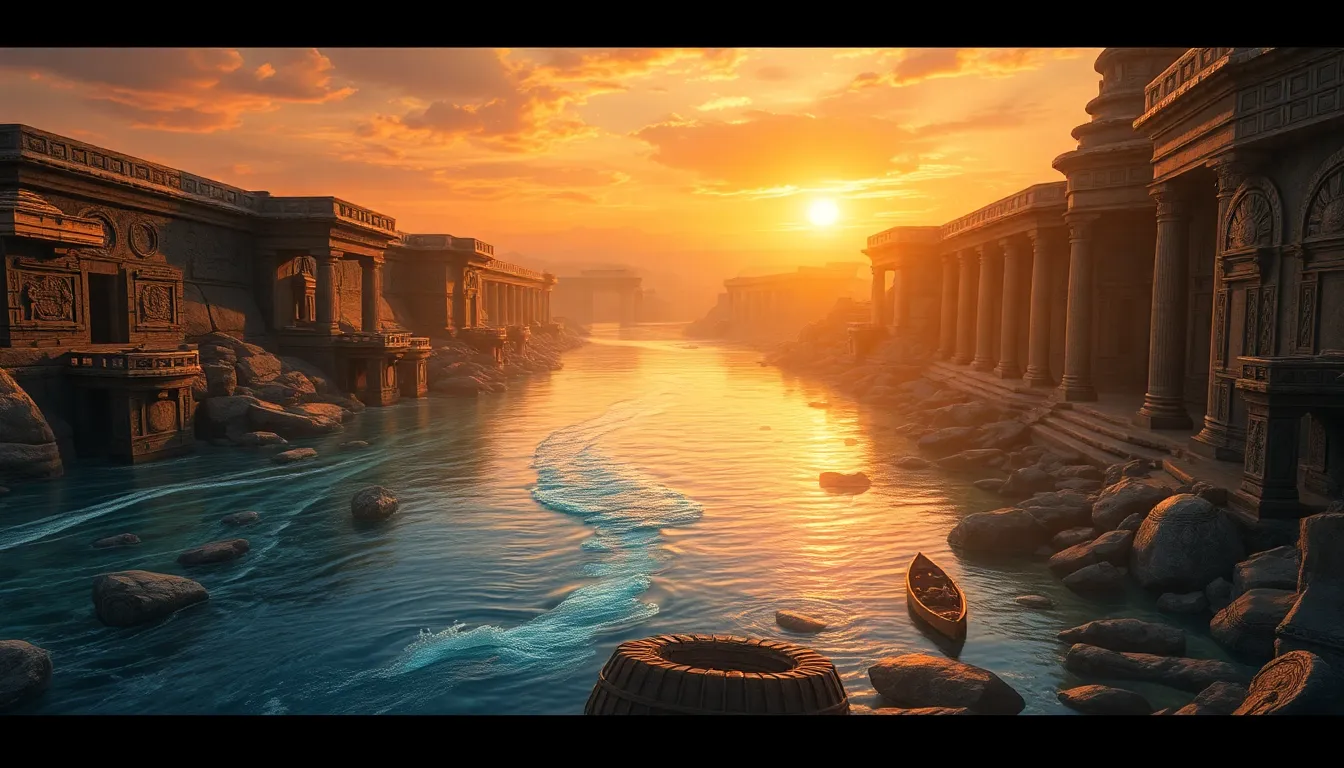
The River of the Ancients: Myths of Early Civilizations
Introduction to Rivers in Early Civilizations
Rivers have always played a crucial role in the development of human societies. They are not just mere bodies of water but lifelines that have nurtured civilizations, providing water for consumption, agriculture, and transportation. From the banks of the Nile to the tributaries of the Amazon, rivers have shaped the cultures, economies, and spiritual beliefs of ancient peoples.
As a result, many early civilizations wove rivers into their myths and legends, attributing to them both physical and spiritual significance. This article explores the multifaceted role of rivers in mythology across various cultures, revealing how these natural wonders influenced early human thought and belief systems.
The Role of Rivers in Mythology
In many ancient cultures, rivers held profound symbolism. They were often seen as the source of life, embodying fertility and abundance. Conversely, they also represented death and the unknown, often acting as barriers between the living and the dead. Common themes associated with rivers in mythology include:
- Life: Rivers provided essential resources for agriculture and sustenance.
- Death: Many myths depict rivers as pathways to the afterlife.
- Rebirth: Rivers often symbolize renewal and the cyclical nature of existence.
The Nile River: Life and Death in Egyptian Mythology
The Nile River was the lifeblood of Ancient Egypt, supporting agriculture and enabling the flourishing of one of the world’s earliest civilizations. Its annual flooding deposited rich silt on the land, allowing crops to thrive. The Egyptians revered the Nile, viewing it as a divine gift.
In Egyptian mythology, the Nile was associated with the god Osiris, who represented life, death, and resurrection. According to legend, Osiris was killed by his brother Seth and dismembered, with his body parts scattered along the Nile. His wife, Isis, collected the pieces and brought him back to life, symbolizing the river’s role in death and rebirth.
The Euphrates and Tigris: Mesopotamian Legends
The Euphrates and Tigris rivers are often referred to as the cradle of civilization, as they supported the rise of ancient Mesopotamia. These rivers provided fertile land for agriculture, enabling the growth of powerful city-states.
Mesopotamian mythology includes important creation myths, such as the Enuma Elish, which describes the birth of the world from the waters of chaos. The Epic of Gilgamesh also highlights the significance of these rivers, portraying them as both life-giving and perilous. The hero Gilgamesh embarks on a journey along the Euphrates, seeking wisdom and immortality, emphasizing the river’s dual nature as a source of both knowledge and danger.
The Indus River: Early Civilization and Sacred Myths
The Indus River was central to the development of the Indus Valley Civilization, one of the world’s earliest urban cultures. The river provided water for irrigation, fostering agriculture and trade.
In Hindu tradition, the Indus River is often linked to various myths and deities. It is sometimes identified with the sacred river Saraswati, which is associated with knowledge and wisdom. The river’s significance is reflected in the spiritual practices of the region, where rivers are worshipped as divine entities embodying purity and life.
The Ganges: Sacred Waters and Spiritual Myths
The Ganges River holds immense cultural and religious significance in India, revered as the holiest river in Hinduism. It is believed that bathing in the Ganges can purify the soul and wash away sins.
According to mythology, the Ganges descended from the heavens, and its descent was facilitated by Lord Shiva, who caught the river in his matted hair to prevent it from flooding the earth. This tale underscores the river’s divine origins and its importance in the spiritual landscape of India. The Ganges is also associated with various rituals, including cremation ceremonies, highlighting its role in the cycle of life and death.
The Yangtze and Yellow Rivers: Chinese Creation Myths
The Yangtze and Yellow Rivers are essential to Chinese civilization, serving as vital sources of water and fertile land. These rivers have been central to Chinese culture and mythology for millennia.
In Chinese mythology, the rivers are often personified as deities. For example, the River God of the Yangtze is celebrated for providing sustenance and prosperity. Myths such as the legend of the goddess Nüwa, who repaired the heavens after a great flood, emphasize the rivers’ significance in the creation and maintenance of the world, as well as their role in the cycle of life.
The Amazon River: Myths of the Indigenous Peoples
The Amazon River is home to a rich tapestry of myths from various indigenous tribes. These narratives often reflect the profound connection between the people and the natural world.
Common themes in Amazonian mythology include the spirit of the river and the interconnectedness of life. Many tribes believe that the river is inhabited by spirits that protect the forest and its inhabitants. Myths often emphasize the importance of balance and respect for nature, illustrating the deep reverence these cultures have for their environment.
Comparative Analysis: Common Threads in River Myths
Across various civilizations, one can discern common threads in river myths. Despite cultural differences, many stories reflect similar themes of life, death, and rebirth. Rivers are often portrayed as sacred entities, embodying both nurturing and destructive forces.
Environmental factors have also shaped these myths. For instance, the predictability of the Nile’s flooding inspired agricultural societies to view the river as a benevolent force, while unpredictable rivers like the Yangtze might lead to more nuanced and cautionary tales about nature’s power.
Conclusion: The Enduring Legacy of River Myths
River myths have left an indelible mark on contemporary cultures, influencing art, literature, and spiritual practices. These stories remind us of the vital role rivers play in sustaining life and shaping human identity.
As we reflect on the importance of rivers in human history, we recognize that they are more than just physical entities; they are symbols of our connection to the earth, our communities, and our shared past. The myths surrounding these rivers continue to resonate, reminding us of the enduring legacy of ancient civilizations and their profound relationship with the natural world.