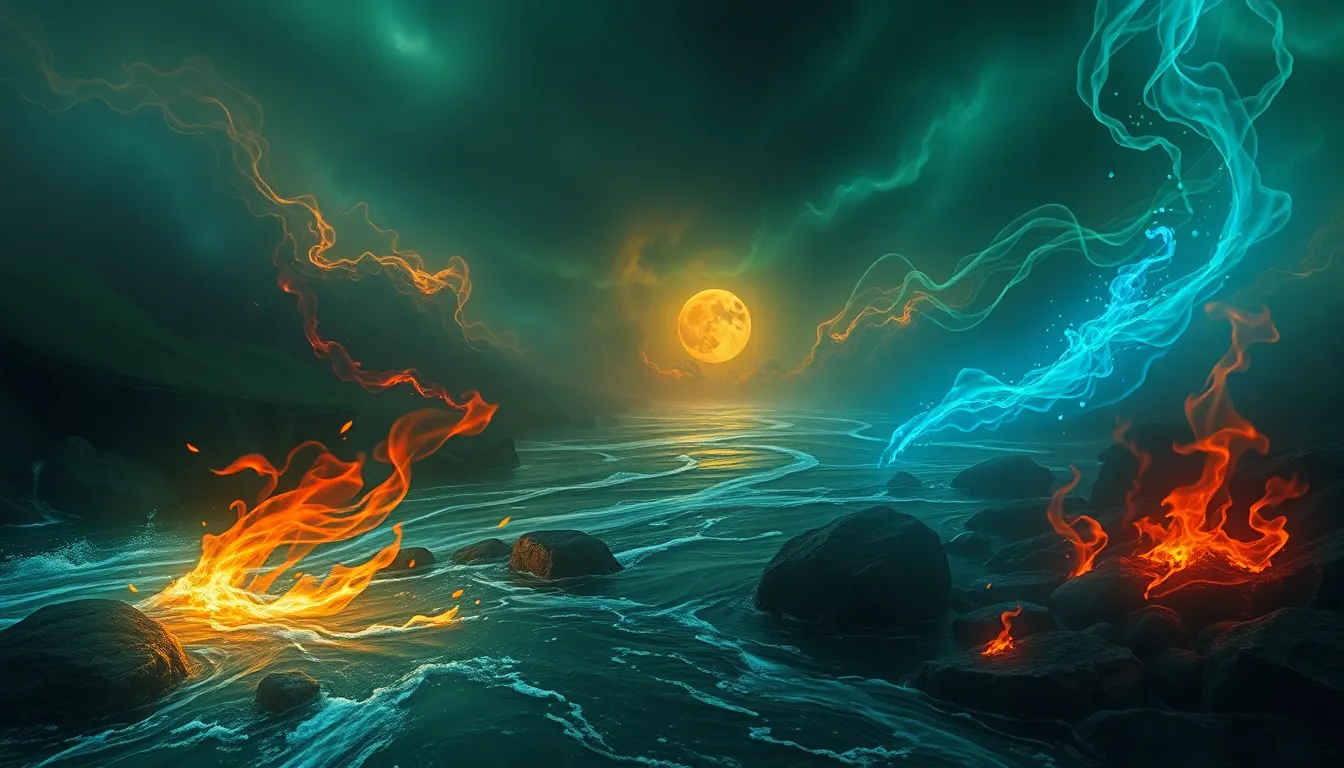
The River of the Elements: Myths of Earth, Air, Fire, and Water
1. Introduction to Elemental Myths
Elemental myths are narratives that center around the four fundamental elements: Earth, Air, Fire, and Water. These myths serve as a reflection of humanity’s relationship with nature and the universe, embodying cultural values, beliefs, and the essence of life itself. Through the lens of these elements, cultures around the world have crafted stories that explain natural phenomena, express human emotions, and impart moral lessons.
The four elements—Earth, Air, Fire, and Water—are not just physical entities; they symbolize different aspects of existence. Earth represents stability and nourishment, Air embodies freedom and intellect, Fire signifies transformation and passion, while Water symbolizes emotion and adaptability. Exploring these myths across diverse cultures reveals the universal themes that resonate with human experience.
2. The Element of Earth: Foundations and Folklore
Earth is often seen as the mother, the provider of sustenance and shelter. Its symbolism varies across cultures, reflecting the foundational aspects of life.
- Symbolism of Earth in various cultures:
- In many indigenous cultures, Earth is revered as a living entity, often personified as a goddess.
- In ancient Greece, Gaia was considered the personification of Earth, symbolizing fertility and the nurturing aspect of nature.
- In Hinduism, Prithvi is the Earth goddess, associated with stability and nourishment.
Numerous myths feature Earth deities, such as:
- Gaia: The primordial mother in Greek mythology who birthed the Titans.
- Prithvi: The Earth goddess in Hindu mythology, revered in various prayers and rituals.
- Mother Nature: A modern personification of Earth, embodying the spirit of nature and its bounty.
Creation myths often highlight the role of Earth as the foundation of life. In many cultures, the Earth is depicted as emerging from chaos or as a divine creation, establishing a sacred connection between humanity and the land.
3. The Element of Air: Breath of Life and Change
Air is a powerful symbol of freedom, intellect, and transformation. It is often associated with the spirit and the divine, representing the unseen forces of nature.
Myths surrounding wind gods and spirits are prevalent in many cultures:
- Zephyrus: The Greek god of the west wind, symbolizing gentle breezes and the arrival of spring.
- Vayu: In Hindu mythology, Vayu is the god of wind, representing strength and the life force.
- Feng Po Po: The Chinese goddess of the wind, who controls the weather and brings the seasons.
The transformative power of Air is evident in storytelling, where characters undergo significant changes through the influence of air—be it through the winds of change or the breath of life. Air is often portrayed as a catalyst for transformation, representing new beginnings and the essence of communication.
4. The Element of Fire: Destruction and Renewal
Fire holds a dual nature in mythology, symbolizing both destruction and renewal. It is a force that can create and destroy, embodying passion, chaos, and transformation.
- The dual nature of Fire in mythology:
- In many cultures, fire is seen as a purifying element, cleansing the old to make way for the new.
- Conversely, it also represents danger and chaos, often leading to destruction if uncontrolled.
Prominent fire gods include:
- Hephaestus: The Greek god of fire and craftsmanship, representing the creative aspect of fire.
- Agni: The Hindu god of fire, crucial in Vedic rituals and symbolizing transformation.
- Pele: The Hawaiian goddess of volcanoes, representing the fierce and destructive power of fire.
Fire plays a significant role in rituals across cultures, symbolizing purification, transformation, and renewal. From ancient ceremonies to modern practices, fire remains a powerful symbol of change and rebirth.
5. The Element of Water: Life’s Source and Emotional Depth
Water is often seen as a source of life, symbolizing fluidity, adaptability, and emotional depth. It is essential for survival and is frequently associated with the unconscious mind and the flow of emotions.
Myths surrounding water deities highlight their influence over life and nature:
- Poseidon: The Greek god of the sea, representing both the nurturing and destructive aspects of water.
- Yemaya: The African goddess of the sea, embodying motherhood and the fertility of water.
- Nuwa: In Chinese mythology, she is associated with creation and the nurturing aspect of water.
Rivers, lakes, and oceans hold great significance in folklore, often seen as sacred spaces that connect the physical and spiritual worlds. They represent the flow of life and the emotional currents that shape human experiences.
6. Interconnections: The Synergy of the Elements
Many cultures view the relationships between the elements as integral to their understanding of the world. The interplay of Earth, Air, Fire, and Water creates a dynamic balance that is essential for harmony in nature.
- Myths that illustrate the interplay of elements:
- The Greek myth of the creation of the world, where Gaia (Earth) emerges, and the other elements come into play.
- Native American stories often depict how the elements work together to maintain balance in nature.
The concept of balance in elemental mythology emphasizes harmony, teaching that each element has its place and importance in the cycle of life.
7. The Role of Nature in Elemental Myths
The natural world significantly shapes mythic narratives, with regional variations reflecting the unique geography and climate of different cultures. The environment not only influences the elements but also the stories associated with them.
- Regional variations in elemental myths:
- Desert cultures may emphasize the significance of Water more than those in temperate regions.
- Mountainous societies often have rich narratives about Earth and Fire due to their landscapes.
Climate and environment impact myth development, as stories emerge from the needs and experiences of people living in specific conditions, illustrating humanity’s relationship with nature.
8. Contemporary Interpretations and Adaptations
Modern literature and media have reinterpreted elemental myths, infusing traditional narratives with contemporary themes. These adaptations resonate with current societal values and challenges.
- Examples of modern stories inspired by elemental themes:
- Avatar: The Last Airbender explores the balance of the four elements, reflecting themes of harmony and conflict.
- In literature, works like The Broken Earth trilogy delve into elemental powers and their implications on society.
The relevance of these myths in contemporary society lies in their ability to address universal human experiences, offering insights into our relationship with the world and each other.
9. The Educational Value of Elemental Myths
Elemental myths provide valuable lessons about human nature, society, and the environment. They serve as educational tools, preserving cultural heritage and imparting wisdom across generations.
- The role of elemental myths in cultural education:
- They teach respect for nature and the interconnectedness of all life.
- They offer moral lessons about balance, responsibility, and the consequences of actions.
By examining these myths, we gain insight into the values and beliefs that shape human civilization, fostering a deeper understanding of our place within the natural world.