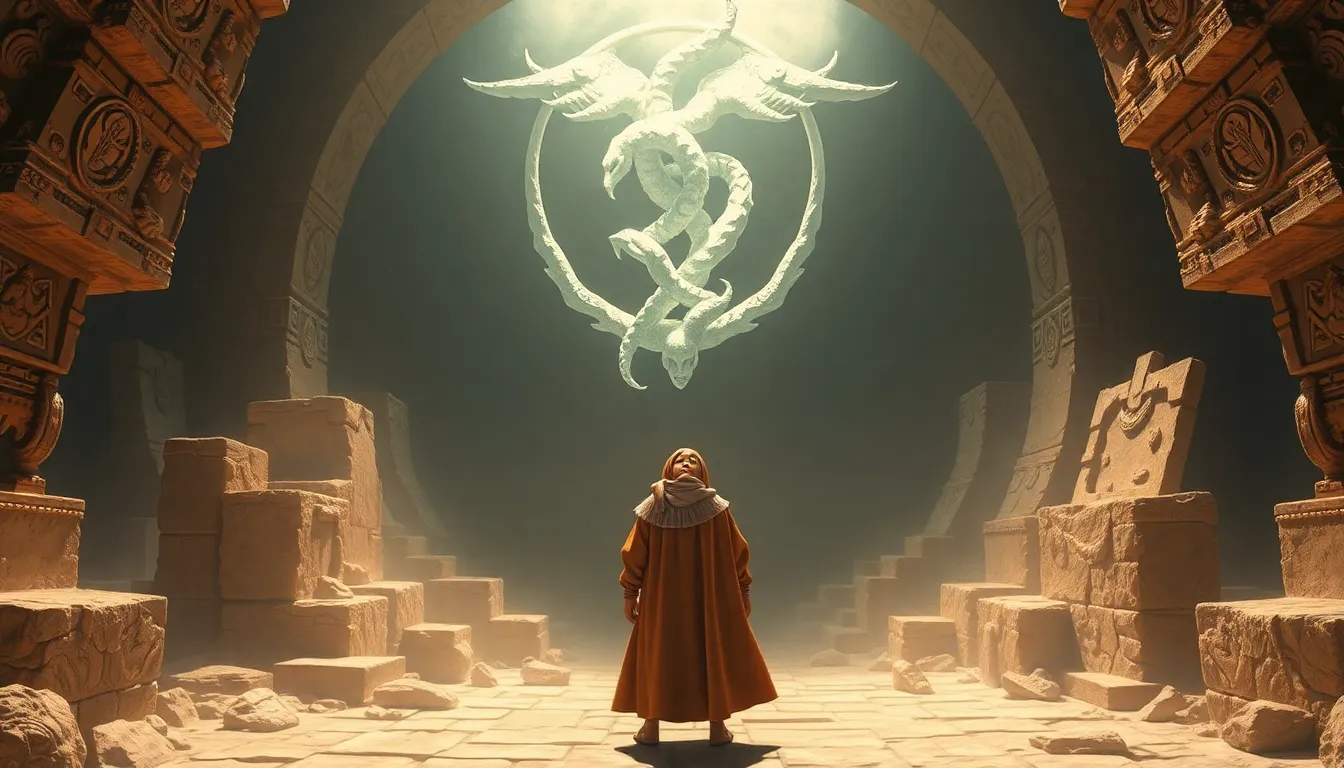
Unraveling the Mysteries: 6 Quests That Baffle Scholars
I. Introduction
Throughout history, humanity has been captivated by mysteries that challenge our understanding of the world. This article aims to delve into six enduring quests that continue to baffle scholars, igniting curiosity and debate across academic disciplines. The significance of these mysteries lies not only in their enigmatic nature but also in their ability to stimulate scholarly inquiry, promote cultural discourse, and inspire creativity in literature and the arts.
The six quests we will explore include the Lost City of Atlantis, the identity of William Shakespeare, the Voynich Manuscript, the Nazca Lines, the Bermuda Triangle, and the mysteries of Stonehenge. Each of these topics presents a unique blend of historical intrigue, cultural significance, and ongoing research that keeps scholars and enthusiasts alike engaged.
II. The Lost City of Atlantis
The legend of Atlantis dates back to the works of the ancient Greek philosopher Plato, who described it as a powerful and advanced civilization that mysteriously vanished. According to Plato, Atlantis was a large island located beyond the Pillars of Hercules (modern-day Strait of Gibraltar).
Numerous theories have emerged regarding the location and existence of Atlantis, including:
- It being situated in the Mediterranean, specifically near Santorini.
- Possibly existing in the Caribbean, such as the Bimini Road in the Bahamas.
- Some theories suggest it could be in Antarctica, hidden beneath the ice.
The impact of Atlantis on literature and popular culture is profound, inspiring countless novels, movies, and artistic works. The allure of a lost civilization continues to resonate, prompting both scholarly investigation and imaginative storytelling.
III. The Identity of William Shakespeare
The authorship question surrounding William Shakespeare has puzzled scholars for centuries. While the traditional view holds that Shakespeare of Stratford-upon-Avon penned the iconic works attributed to him, some critics argue that he may not have been the true author.
Several major candidates have been proposed to have written Shakespeare’s plays, including:
- Edward de Vere, the Earl of Oxford
- Francis Bacon, the philosopher and statesman
- Christopher Marlowe, the playwright
The implications of this debate extend beyond literary analysis; they raise questions about the nature of authorship, the preservation of historical records, and the cultural legacy of the English Renaissance.
IV. The Voynich Manuscript
The Voynich Manuscript is a mysterious book filled with cryptic text and bizarre illustrations, dating back to the early 15th century. Its contents range from botanical drawings to astronomical diagrams, yet its purpose and meaning remain elusive.
Attempts at decryption have involved various languages and codes, but none have conclusively deciphered the manuscript. Some notable theories regarding its origin and purpose include:
- It being an elaborate hoax.
- A herbal text with coded language.
- A book of alchemy or astrology.
The Voynich Manuscript’s unbroken code continues to fascinate linguists, historians, and cryptographers, making it one of the most studied yet least understood artifacts in the literary world.
V. The Nazca Lines
The Nazca Lines are enormous geoglyphs etched into the desert floor of southern Peru, depicting various figures, including animals and geometric shapes. These ancient designs, created by the Nazca culture between 500 BCE and 500 CE, cover an area of nearly 1,000 square kilometers.
Theories about the purpose of the Nazca Lines are varied and intriguing:
- Some suggest they were astronomical markers, aligning with celestial events.
- Others propose they served religious or ritualistic purposes, possibly related to water worship.
- Some theories even suggest they were artistic expressions or communal projects.
Ongoing research and archaeological discoveries continue to shed light on these enigmatic geoglyphs, revealing their significance in understanding ancient cultures and their relationship with the environment.
VI. The Bermuda Triangle
The Bermuda Triangle, located in the western part of the North Atlantic Ocean, has gained notoriety for the mysterious disappearance of numerous ships and aircraft. This phenomenon has sparked widespread intrigue and speculation.
A detailed analysis of reported incidents and scientific investigations reveals a range of possible explanations, including:
- Natural phenomena such as underwater earthquakes and methane hydrate eruptions.
- Human error and navigational challenges in a heavily trafficked area.
- Conspiracy theories involving extraterrestrial activity or secret military operations.
The cultural impact of the Bermuda Triangle has been significant, inspiring countless books, movies, and documentaries that perpetuate its mystique and invite further exploration into the unknown.
VII. The Mysteries of Stonehenge
Stonehenge, an iconic prehistoric monument in Wiltshire, England, has fascinated visitors and scholars for centuries. Constructed between 3000 BCE and 2000 BCE, it consists of a circular arrangement of massive stones, with each stone weighing several tons.
Theories regarding the construction and purpose of Stonehenge are diverse:
- Some experts suggest it was a ceremonial site related to ancient religious practices.
- Others believe it served as an astronomical observatory, aligning with solstices and lunar events.
- Recent theories propose that it may have functioned as a healing center.
Recent archaeological findings, including the discovery of nearby monuments and burial sites, continue to fuel debates about the social and cultural significance of Stonehenge in Neolithic society.
VIII. The Disappearance of the Roanoke Colony
The Roanoke Colony, established in 1585 on Roanoke Island (in present-day North Carolina), vanished without a trace, leading to one of America’s oldest mysteries. When a supply ship returned in 1590, the settlers had disappeared, leaving only the word “CROATOAN” carved into a tree.
Numerous theories and hypotheses have emerged regarding the colony’s fate:
- One theory suggests they assimilated with local Native American tribes.
- Another posits they faced starvation or conflict with indigenous peoples.
- Some theories even propose that they relocated to a nearby island.
The mystery of Roanoke has left an indelible mark on American history and folklore, prompting further exploration of early colonial life and interactions between settlers and Native Americans.
IX. Conclusion
In summary, the six quests explored in this article—the Lost City of Atlantis, the identity of William Shakespeare, the Voynich Manuscript, the Nazca Lines, the Bermuda Triangle, and the mysteries of Stonehenge and Roanoke—highlight the enduring allure of the unknown. These mysteries not only challenge our understanding but also serve as catalysts for scholarly inquiry and cultural exploration.
The role of mystery in advancing scholarly inquiry is invaluable, as it encourages researchers to question, investigate, and seek deeper truths. As we continue to explore these enigmatic quests, we are reminded of the importance of curiosity and the pursuit of knowledge in shaping our understanding of the past and its impact on the present.
X. Further Reading and Resources
For those interested in diving deeper into these fascinating mysteries, here are some suggested resources:
- Books:
- “Atlantis: The Antediluvian World” by Ignatius Donnelly
- “Shakespeare: The Evidence” by Mark Anderson
- “The Voynich Manuscript: The Mystery of the World’s Most Enigmatic Book” by Geraldine Brooks
- “The Nazca Lines: A New Perspective on Their Origin and Purpose” by Christopher H. L. Tompkins
- “The Bermuda Triangle: A Novel” by Charles Berlitz
- “Stonehenge: The Story So Far” by Mike Parker Pearson
- “The Lost Colony of Roanoke” by Jean Fritz
- Documentaries and Podcasts:
- “Secrets of the Lost City: Atlantis” (Documentary)
- “Shakespeare Uncovered” (PBS Series)
- “The Voynich Manuscript: Unsolved Mysteries” (Podcast)


