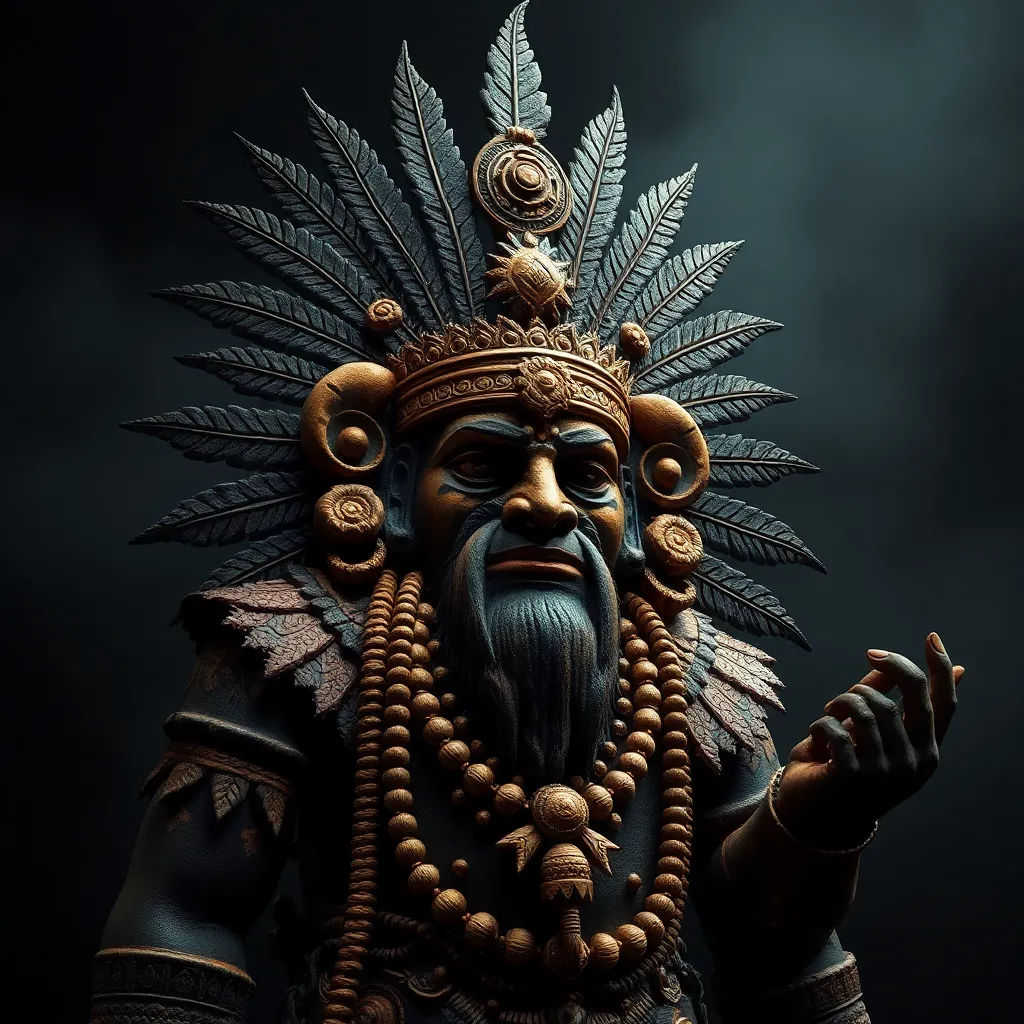
A creature that devours people accepts a drink—and gives its intended victim an opening. In Greek epic, Odysseus offers wine to Polyphemus. In Japanese myth, Susanoo prepares sake for Yamata no Orochi. Both encounters turn appetite against an overwhelmingly powerful opponent. Yet the resemblance becomes more interesting when we ask what happens after the monster falls asleep.
This comparison follows Book 9 of the Odyssey, in A. S. Kline’s translation, and the serpent episode in W. G. Aston’s translation of the Nihongi, also called the Nihon shoki. These are particular textual witnesses, not interchangeable summaries of everything Greeks or Japanese people believed. Read alongside each other, they show how the same practical trick can serve very different stories.
1. The shared weakness is appetite, not small size
The immediate attraction of this comparison is the reversal of power. A monster’s capacity to consume people makes it terrifying; its willingness to consume something else makes it vulnerable. Neither protagonist needs to become physically larger. Instead, each changes the conditions under which force will be used.
But describing the device simply as intelligence defeating strength misses an important distinction. Odysseus is a mortal trying to escape. Susanoo is a kami, a divine figure whom Kokugakuin University’s account of Yamata no Orochi places in Izumo after his banishment from heaven. Calling both men ordinary underdogs would flatten the Japanese narrative into the Greek one.
Nor does drink replace violence. It creates the opportunity for violence to work. The useful comparative question is therefore not whether wine and sake possess identical symbolism. It is how each narrative moves from consuming people to consuming a drink, and from that drink to a changed balance of power.
2. Odysseus needs a living enemy
In the Cyclops episode, wine is only one part of an escape involving intoxication, a false name, blinding and concealment beneath sheep. Polyphemus survives. That matters: the giant controls the stone blocking the cave, so killing him outright would leave the captives imprisoned. Odysseus needs to disable his captor without eliminating the strength required to open the exit.
The episode consequently makes cleverness a matter of managing constraints. A successful attack is not automatically a successful escape. The hero must think beyond the sleeping body in front of him to the obstacle that will remain afterward. Read this way, the wine buys an opportunity rather than delivering a complete victory.
Polyphemus also turns the language of hospitality into a threat when he promises to eat his wine-giver last. The drink circulates within a grotesque imitation of receiving a guest. This is an interpretation of the scene’s structure, but it follows the contrast between the offered drink and the promised treatment in the text.
The result is not a comforting celebration of intelligence. The escape requires several connected decisions, and survival remains fragile. The episode asks readers to appreciate calculation without assuming that a clever person is therefore safe, restrained or consistently wise.
3. Susanoo prepares the encounter before it begins
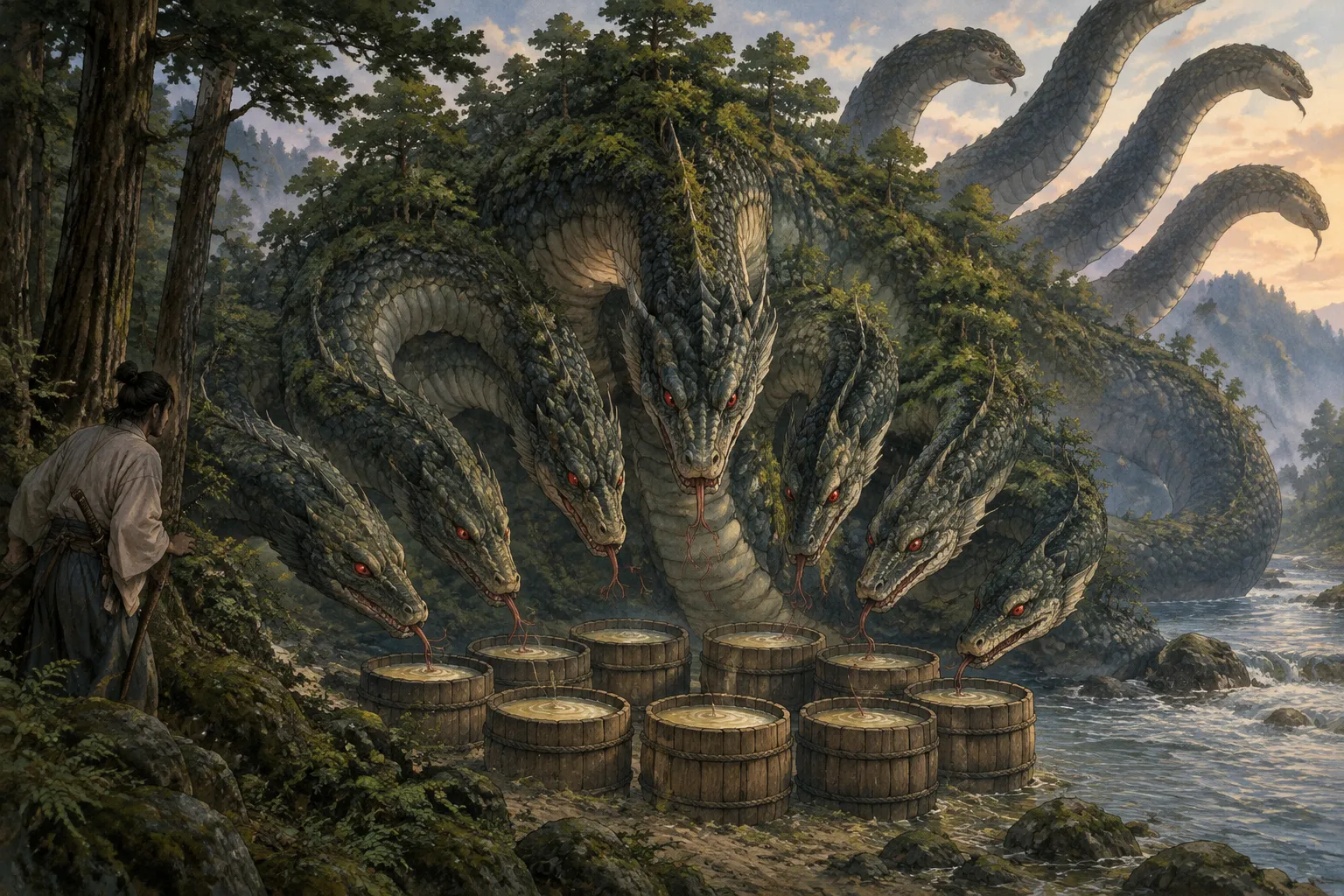
The main serpent narrative in Aston’s translated Nihongi has a different shape. An elderly couple face the loss of their remaining daughter, Kushi-nada-hime, after a serpent has consumed her sisters. Susanoo arranges eight containers of sake. The creature drinks, sleeps and is cut apart; within its tail, he discovers a sword.
Here the plan is prepared for an approaching danger rather than improvised inside a prison. On a storytelling level, that changes the emotional rhythm. The audience can watch preparations accumulate and anticipate the creature’s arrival. The monster enters an arrangement designed around its appetite.
There is no equivalent requirement to preserve the serpent as a living doorkeeper. Susanoo’s task can proceed to destruction. Where Odysseus must make his enemy temporarily useful, Susanoo must make his enemy vulnerable enough to kill. The similar drinking trick therefore answers two different practical questions.
Even the number of drinking places serves the encounter’s particular form: an eightfold arrangement answers an eightfold creature. We need not give the number a universal meaning to notice the narrative precision. The trap is fitted to this opponent rather than functioning as a generic magical solution.
4. The Japanese text preserves more than one version
The Nihongi does not present the serpent encounter as a single seamless account. Its alternative writings vary the circumstances. One describes sake made from different fruits and poured into the creature’s mouths with an offer of a feast. Another explicitly calls the preparation poisonous sake.
These differences matter because a comparison can become misleading through excessive tidiness. If we combine every striking feature into one retelling, we manufacture a version more convenient than the surviving witness. It is better to say which account supplies a detail, especially when deciding whether ordinary intoxication or an explicitly harmful preparation is involved.
The feast offered in one variant makes an especially suggestive parallel with Polyphemus’s distorted hospitality. But it remains a parallel between particular passages, not proof that both traditions express one fixed rule about feeding strangers. Similar language can do different work in different narrative settings.
For readers, this is a useful habit beyond this pair of monsters: ask whether a familiar myth summary represents one text, several variants, or a modern combination. Variation is not clutter to remove. It can reveal which elements remain stable and which storytellers or compilers allow to change.
5. The aftermath changes the meaning of the trick
Kokugakuin University’s encyclopedia entry connects the serpent’s defeat with the legendary origin of Kusanagi, one of the three imperial regalia. It also presents agricultural and river-management interpretations as interpretations, alongside another theory identifying the creature with a mountain bandit. These are proposed readings, not established explanations that cancel the narrative.
This distinction protects the comparison from an easy mistake. We cannot conclude that sake represents irrigation simply because a river interpretation exists. Nor should the serpent become merely a disguised engineering problem. The source preserves a divine encounter while scholarship asks what further relationships its names, landscape and objects might suggest.
The Greek aftermath points elsewhere. In the closing movement of Book 9, Odysseus reveals his identity after escaping, and Polyphemus appeals to Poseidon against him. The successful deception does not close the danger. The hero’s desire to claim the achievement helps reopen it.
Comparatively, then, the same device leads toward different horizons: a divine sword and its significance in the Japanese account, an endangered homecoming in the Greek epic. Neither outcome can be explained adequately by saying that monsters are greedy or heroes clever.
That is also why creatures should be compared by their actions and narrative roles, not just their appearance—a distinction explored in our comparison of Egyptian and Greek sphinxes. Polyphemus and Yamata no Orochi share a vulnerability without becoming the same kind of monster. Their drinking scenes are memorable for the reversal they stage; their differences tell us what each story needs that reversal to accomplish.
Sources and further reading
- Homer, Odyssey, Book 9, translated by A. S. Kline: the complete Cyclops encounter and its aftermath.
- Nihongi, Volume 1, translated by W. G. Aston, reproduced by Maricopa Open Digital Press: the serpent narrative and alternative writings.
- Matsunaga Naomichi, “Yamatanoorochi”, Kokugakuin University’s Encyclopedia of Shinto: narrative context and explicitly identified interpretive theories.