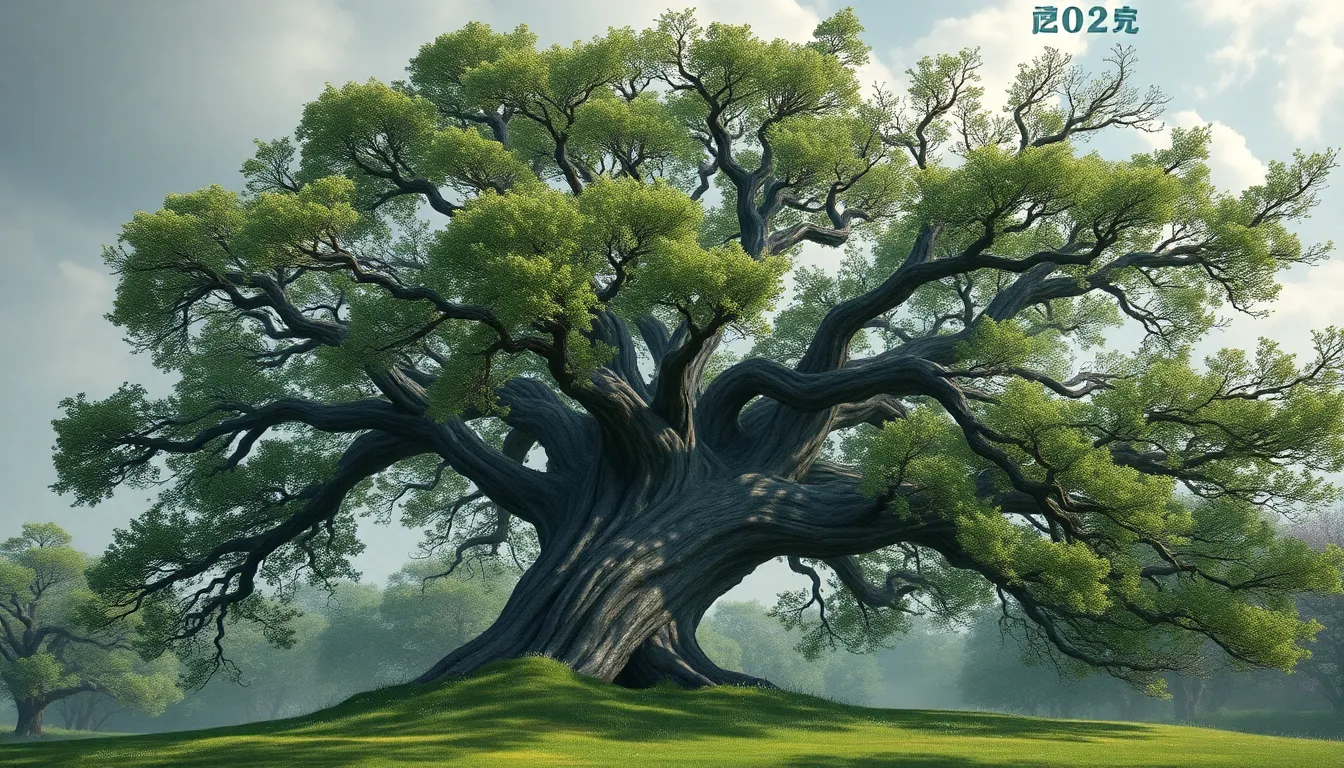
The axe reaches the tree, and the tree cries out. In Callimachus’s Greek Hymn to Demeter, a towering poplar suffers an injury that its goddess immediately notices. In the Norse Prose Edda, the great ash Yggdrasil endures damage too—but its story includes a strikingly different response: regular care. These are not accounts of the same mythical tree. Read together, however, they pose an intriguing question: what does holiness protect, if it does not prevent harm?
The answer depends on the text. Demeter’s grove makes destruction an offense against a divine relationship. Yggdrasil makes continued existence compatible with vulnerability. Comparing them helps separate two ideas that are easy to confuse: a sacred thing can be powerful without being indestructible.
One question, three distinct textual witnesses
This comparison rests on three literary accounts, not on a supposed universal belief about trees. The Greek poet Callimachus tells the Erysichthon story in his sixth hymn, addressed to Demeter. The Roman poet Ovid retells that Greek myth in Latin in Book VIII of the Metamorphoses, calling the goddess Ceres. The Norse material comes from Gylfaginning in the medieval Icelandic Prose Edda, associated with Snorri Sturluson.
The distinction matters. Ovid is not an independent witness to an unrelated Roman tree myth: he is giving a Roman literary treatment of a Greek story. Conversely, Yggdrasil should not be treated as Demeter’s tree under another name. The useful comparison concerns how these particular narratives handle injury, responsibility and preservation—not whether their gods secretly represent identical forces.
The translations also require some care. Anderson’s older English edition spells Yggdrasil as Ygdrasil and gives several Norse names in forms unfamiliar to modern readers. Its translated narrative is the evidence used here; its expansive nineteenth-century introductory theories are not being adopted.
Callimachus: a grove is not a timber supply
In Callimachus’s account, Erysichthon enters Demeter’s grove with twenty attendants armed for felling. The poplar struck first cries out. Demeter takes the appearance of her priestess Nicippe and warns him to stop. He threatens her and explains that the timber will serve a building where he can banquet with his companions. When the goddess reveals herself, the attendants flee; she spares them because they acted under their master’s compulsion. Erysichthon receives ravenous hunger instead. These details belong specifically to Callimachus’s confrontation in the grove.
The banquet plan gives the punishment its bitter precision. On one reading, Erysichthon wants to turn a place dedicated to the giver of nourishment into infrastructure for his own consumption. The answer is not simply the loss of food. It is the loss of the ability to have enough.
His mistake, in this interpretation, is a failure to recognize limits on use. A tree that he can physically cut is not therefore a tree he is entitled to cut. The warning creates an opportunity to acknowledge that distinction before the damage continues.
Equally important is the treatment of the attendants. The narrative does not assign identical responsibility to everyone holding a tool. Its distinction between command and compulsion complicates any reading that reduces the episode to an automatic curse triggered by contact with sacred wood.
Ovid: injury becomes impossible to overlook
Ovid changes the focal tree to an enormous oak hung with devotional tokens. His account makes its suffering bodily: the wounded trunk bleeds, and a nymph within announces her approaching death. Erysichthon also kills a man who tries to restrain him. After the oak falls, the grieving Dryads appeal to Ceres, who arranges punishment through personified Famine. The sequence appears in Ovid’s account of the sacred oak, beginning at Book VIII, line 737.
This version shifts the emphasis toward deliberate refusal to respond. The signs are not subtle. Religious dedication, visible suffering, human resistance and the nymph’s speech all challenge Erysichthon’s actions. His persistence makes ignorance an increasingly implausible explanation.
The bleeding tree can therefore be read as more than a marvelous effect. It forces a question about what counts as injury. If the reader initially sees only wood, the narrative supplies the language of a wounded body. Erysichthon’s violence against the restraining man further prevents a comfortable separation between his treatment of the grove and his treatment of people.
Yet Ovid’s oak should not replace Callimachus’s poplar in a blended retelling. Tree species, the form of the warning and the route to punishment differ. Keeping those differences visible reveals what each poet makes the reader confront.
Yggdrasil: holiness requires maintenance
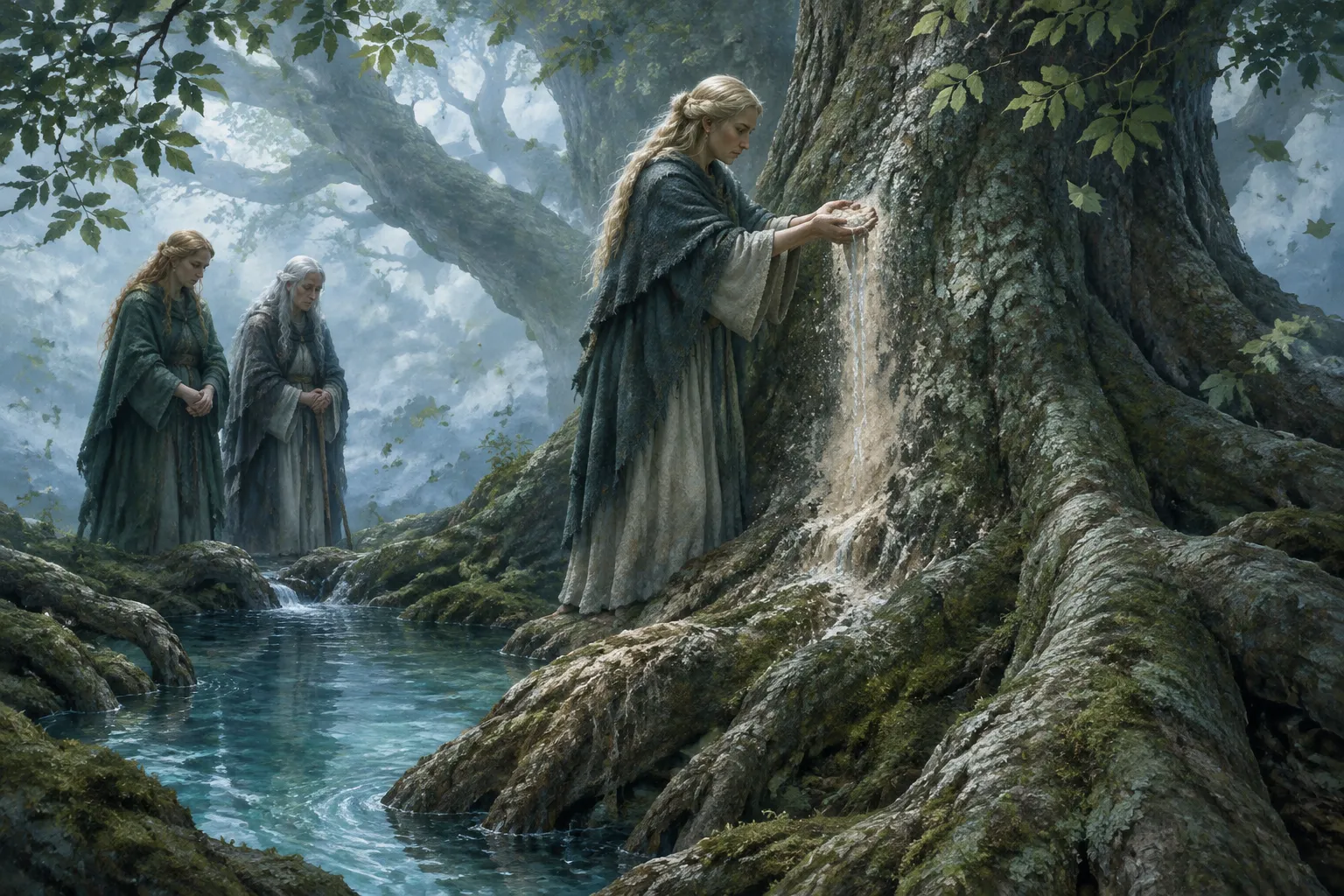
In Gylfaginning, Yggdrasil is the great ash beside which the gods assemble. It nevertheless suffers: stags browse above, decay attacks its side, and Nidhogg gnaws below. The Norns take water and clay from the spring of Urd and sprinkle the tree so that its branches will not wither or decay. Both the damage and the tending occur in the account of Yggdrasil in sections 15–16.
The contrast with Erysichthon is not that the Norse tree matters less. Rather, this passage presents endurance as something maintained amid continuing pressures. Its central action is not a spectacular reprisal against one transgressor but a repeated act of preservation.
That difference changes the reader’s question. In the grove, we ask who has violated a boundary and who bears responsibility. At Yggdrasil, we can ask what allows a vulnerable structure to continue. Care is not evidence that the tree lacks sacred importance; it is part of the way that importance becomes visible.
This is an interpretation of the narrative arrangement, not a claim that medieval Norse writers articulated a modern environmental ethic. Nor should every creature around Yggdrasil be turned into an equivalent of Erysichthon. The passage does not present all damage as the same kind of moral offense.
What the comparison changes
These accounts suggest two useful ways to read a sacred tree: as a relationship that imposes obligations, and as a living presence whose continuance involves care. Neither reading requires invulnerability. Indeed, vulnerability is what makes an action toward the tree consequential.
There is a related distinction in our comparison of Ladon and Fafnir as treasure guardians: similar story elements invite comparison, but their narrative roles must still be distinguished. A guarded treasure and a sacred tree both raise questions about access; neither automatically supplies a single cross-cultural answer about ownership.
For a modern reader, the temptation is to translate all three accounts into one slogan about respecting nature. That can be a starting response, but it leaves out their most revealing differences. Callimachus distinguishes coercion from command. Ovid makes the refusal to acknowledge suffering horrifyingly explicit. The Yggdrasil passage makes preservation repetitive rather than final.
The sharper shared question is not simply whether a tree is sacred. It is what follows from recognizing it as sacred. In these readings, holiness does not remove a thing from the reach of axes, hunger, browsing or decay. It changes what we should notice—and what we understand people or divine beings to owe it.
Sources and further reading
- Callimachus, Hymn to Demeter, especially lines 24–70; translated by A. W. Mair.
- Ovid, Metamorphoses, Book VIII, especially lines 737–822; translated by Henry T. Riley. Distinguish Ovid’s narrative from the translator’s separate explanations.
- The Younger Edda, Gylfaginning, sections 15–16; translated by Rasmus B. Anderson, under “On the Wonderful Things in Heaven.”